
Introduction
Unit Goal:
Students will interpret the literary piece “Call of the Wild” AND Students will preview, predict, comprehend, evaluate, synthesize, and discuss the meaning of the novel.
Students will understand the big ideas of the theme.
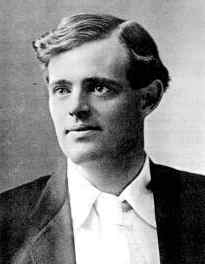
Jack London- The Author

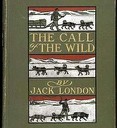
The BOOK:
CALL OF THE WILD
Task
SKILLS & TASK
Identify main idea
Identify and explain information directly stated in the text
Summarize and paraphrase the text or a portion of the text
Make inferences
Draw Conclusions
Identify and analyze the organizational pattern of a text
Identify and analyze conflicts
Analyze relationships between and among characters, setting, and events
Analyze characterization
Analyze point of view
Lessons in this theme relate to the following guided questions:
What factors influence a person‟s decisions?
How do the choices I make today affect me and the world around me?
How do the choices I make influence the person I become?
How does reading help me gain greater insight about the choices I make?
Know you words!!! This is our Call of the Wild Main Vocab List:
|
a. unwonted b. vilely c. assailed d. metamorphosed e. latent f. primordial g. appeasingly h. courier i. fastidiousness j. domesticated k. dominant |
l. precipitate m. score n. marauders o. daunted p. covert q. insubordination r. coveted s. obdurate t. exertion u. salient |
v. callowness w. slovenly x. chronic y. callous z. entice aa. transient bb. impede cc. exploit dd. indiscreet ee. fare |
ff. obliterated gg. tangible hh. pertinacity ii. prowess jj. formidable kk. carnivorous ll. rampant mm. paroxysm nn. usurp |
Using the worksheet (in pairs) Label & Identify the following:
The syllables,pronunciation,part of speech,definition,& create a sentence/example for each word above.
Sample Vocabulary Words and Technology Related Lessons (Using Wordle)

Process
- Know the goals & write them down in your note book
-
Identify all the chapters and write down vocabs found in each chapter on your worksheet
- Know your characters
-
Keep track of your reading (use your reading log-10-15 points worth)
-
Write a half page prediction based on the COTW story
-
Write down all vocabulary (must know) and Read daily (Use your shared pdf story (85 pages)
-
Due after mid term---Research about the Author, Jack London (add picture, Biography, and list of other books written)
CREATE A Vocabulary Foldable Teacher Directions
Vocabulary Foldable Teacher Directions
Parts of a
Vocabulary
Foldable
On Top of Flap:
!"Word
!"Illustration
Under Flap:
!" Sentence
!"Definition
1. The first time your students do this activity, use the 2-page Labeled
Vocabulary Foldable pattern. Run it off front to back so that the dotted
lines fall on each other. After your students know what to do, you can use
the Plain Vocabulary Foldable which only takes a single sheet of paper.
2. Have students fold their papers in half the long way and cut on the four
dotted lines to form five flaps.
3. Choose 5 vocabulary words to introduce to your students. Have them
write one word on the outside of each flap in the top triangle.
4. Use a variety of strategies to teach the words to your students. You can
assign each team one word to look up and teach to the class, or you can
teach the words yourself. Give examples of definitions and how you use
each word in a sentences. You can even have students role play the words
or play charades to have them guess each word.
5. After you have introduced each word, give students time to complete the
other three sections of the flap. In the bottom triangle, under the word,
have them draw a symbol or picture that will help them remember the
word. Then have them open the flap and write the definition and a
sentence. See examples below.
6. When all the flaps are completed, allow some time for students to share
their pictures and sentences with their team or with the class.
Evaluation
1. In the beginning of Chapter I, how is Buck described? Based on this description, how do you think he will deal with the
hardships of the Yukon Territory? Which of his traits will serve him well in his new life? Which will he have to abandon to survive?
2. What important lesson did Buck learn from the man with the club? What is meant by the line, “It was his introduction to the reign of primitive law, and he met the introduction halfway.”?
3. How did François begin to earn Buck’s respect? From the description of this incident, predict what Buck’s relationship
will be with “a big, snowy-white fellow from Spitzbergen.”
4. What is the significance of the title of this chapter?
RUBRICSTAR (personalized based on class needs and indepth understanding on this book/theme/unit)
Conclusion
CALL OF THE WILD by JACK LONDON
SWBAT :
Recall and Interpret
Analyzing Literature
Connect(Making Meaning)
Author Study
(Research/Biography Research)
Credits
Sample UBD for CALL OF THE WILD
http://rela.wicomico.wikispaces.net/file/view/New%20Unit%202%20-%20Grade%207.pdf
This PDF ebook ("Call of the Wild") used in class was created on ebooks:
http://www.free-ebooks.net/ebook/The-Call-of-the-Wild/pdf/view
SIOP Way... Create Foldable Vocabulary
http://www.sanjuan.edu/webpages/gguthrie/files/Vocabulary%20Foldable%20.pdf
PPT LINK : http://www.csun.edu/~krowlands/Content/Academic_Resources/Foldables/Bas…
All about the Jack London:
Teacher Page
CHAPTER 1: Vocabulary
Arbors- n. vines
Aristocrat- n. wealthy person
Array- n. an orderly arrangement
Artesian well- n. a well drilled through impermeable layer to reach water capable of rising to the surface by internal hydrostatic pressure
Calamity- n. disaster
Cayuses- n. small Western horses used by cowboys
Conciliated- v. made friends with
Conveyance- n. means of transportation
Culprit- n. a person guilty of a crime
Demesne- n. lands of an estate
Docilely- adv. Yieldingly to treatment or handling
Dominion- n. the exercise of control Genial- adj. friendly
Impending- v. likely or due to happen
Imperiously- adv. Urgently Incurious- adj. not curious
Insular- adj. Isolated; detached
Kindred- n. family Latent- adj. present or potential
Legion- n. a large number
Metamorphosed- v. changed or transformed
Paddocks- n. enclosed fields in which horses are exercised
Populous- adj. many people
Primitive- adj. very basic Progeny- n. children
Prowess- n. superior ability
Revelation- n. something revealed or learned
Ruction- n. quarrel or noisy disturbance
Sated- adj. fully satisfied
Slaver- n. saliva Soliloquized- v. talked to one’s self
Square-head- n. slang a
Scandinavian or a German
Tidewater- n. seacoast
Treachery- n. betrayal
Uncowed- adj. not frightened
Unwonted- adj. unusual
Weazened- adj. wizened; shriveled; withered
Wheedlingly- adv. attempting to persuade
More Vocabulary followed by each lesson