
Introduction

Muscles are one of those things that most of us take completely for granted, but they are incredibly important for two key reasons:
- Muscles are the "engine" that your body uses to propel itself. Although they work differently than a car engine or an electric motor , muscles do the same thing -- they turn energy into motion.
- It would be impossible for you to do anything without your muscles. Absolutely everything that you conceive of with your brain is expressed as muscular motion. The only ways for you to express an idea are with the muscles of your larynx, mouth and tongue (spoken words), with the muscles of your fingers (written words or "talking with your hands") or with the skeletal muscles (body language, dancing, running, building or fighting, to name a few).
Because muscles are so crucial to any animal, they are incredibly sophisticated. They are efficient at turning fuel into motion, they are long-lasting, they are self-healing and they are able to grow stronger with practice. They do everything from allowing you to walk to keeping your blood flowing!
When most people think of "muscles," they think about the muscles that we can see. For example, most of us know about the biceps muscles in our arms. But there are three unique kinds of muscle in any mammal's body:You have three different types of muscles in your body: smooth muscle, cardiac (say: KAR-dee-ak) muscle, and skeletal (say: SKEL-uh-tul) muscle.
Have a look at this:
http://kidshealth.org/kid/interactive/muscles_it.html
Task
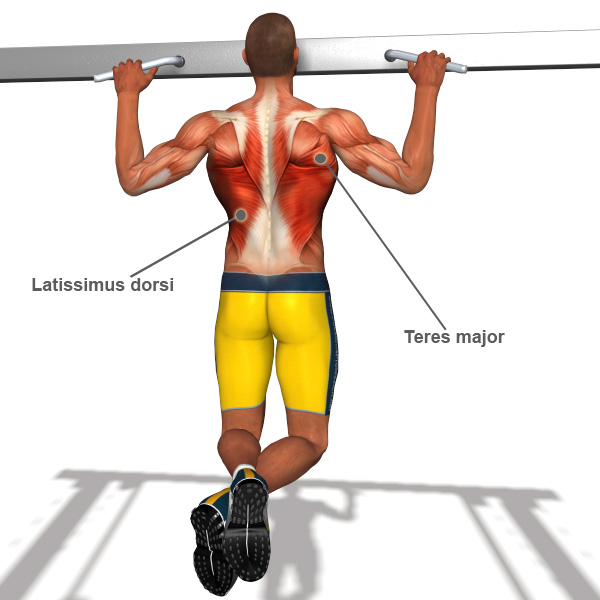 You are a trainer at the Virgin Active gym. You need to explain to your client about how muscles work so that you can design a training program for them.
Use explain everything to show 3 exercises your client can do. Show a real picture as well as an anatomical drawing to show the antogonistic pairs. Explain what types of muscles they are too.
Also as part of your "explain everything" give the answers to the following questions. You need to speak and use key words for each of the questions.
1.
Cardiac muscle is:
- found everywhere
- located in the abdomen
- unique to the heart
2.
Muscle fibres which use oxygen well are called:
- slow twitch
- fast twitch
- full twitch
3.
Muscle contractions which cause movement are
- isometric
- isotonic
- isothematic
4.
Chest muscles used in the tennis forehand are the:
- pectorals
- trapezius
- latissimus dorsi
5.
There is no movement from contraction which is:
- isotonic
- isokinetic
- isometric
6.
A pair of muscles working together would be biceps and:
- triceps
- hamstrings
- abdominals
7.
For eccentric contraction the muscle lengthens as the:
- fibres relax
- fibres do not change
- fibres contract
8.
Growth of muscles is called:
- hypermorphy
- hypersophy
- hypertrophy
9.
Good muscle tone reduces the risk of:
- depression
- injury
- illness
10.
When muscles hypertrophy they gain greater:
- mobility, flexibility and balance
- coordination, reaction time & speed
- size, strength and endurance
Process
Look through each of the pages on the following website to find out the answers to your questions and help with the information
http://www.bbc.co.uk/schools/gcsebitesize/pe/appliedanatomy/3_anatomy_muscles_rev1.shtml
Use this website to help find pictures of the exercise:
http://www.passion4profession.net/en/calf-exercises/
Evaluation
|
|
1 – Developing |
3 – achieved |
5 - outstanding |
|
Organization of slides and pictures |
|
|
|
|
3 exercises |
|
|
|
|
Exercises explained with annotation |
|
|
|
|
Questions answered |
|
|
|
|
Shows general understanding of muscles and their functions |
|
|
|
Total out of 25
Conclusion
Muscles are how we move and live. All movement in the body is controlled by muscles. Some muscles work without us thinking, like our heart beating, while other muscles are controlled by our thoughts and allow us to do stuff and move around.
There are over 650 muscles in the human body. They are under our skin and cover our bones. Muscles often work together to help us move. We don't really have to think about moving each individual muscle. For example, we just think of running and our body does the rest.
How Muscles Work
Muscles work by expanding and contracting. Muscles have long, thin cells that are grouped into bundles. When a muscle fiber gets a signal from its nerve, proteins and chemicals release energy to either contract the muscle or relax it. When the muscle contracts, this pulls the bones it's connected to closer together.
Many of our muscles come in pairs. An example of this is the biceps and triceps in our arms. When the biceps contract the triceps will relax, this allows our arm to bend. When we want to straighten our arm back out, the biceps will relax and the triceps will contract. Muscle pairs allow us to move back and forth.
Fun Facts about Muscles
- Shivering is caused by hundreds of muscles expanding and contracting to produce heat and make us warmer.
- It takes 17 muscles to smile and 43 muscles to frown. All the more reason to smile instead of frown!
- Our longest muscle is the Sartorius. It runs from the hip to the knee and helps us bend the knee and twist our leg.
- The strongest muscle is in our jaw and is used for chewing.
- The smallest muscle is in our ear and is called the stapedius. It is attached to the smallest bone in the body, the stapes.