
Introduction
Blood is a specialized body fluid. It has four main components: plasma, red blood cells, white blood cells, and platelets. Blood has many different functions, including:
- transporting oxygen and nutrients to the lungs and tissues
- forming blood clots to prevent excess blood loss
- carrying cells and antibodies that fight infection
- bringing waste products to the kidneys and liver, which filter and clean the blood
- regulating body temperature
The blood that runs through the veins, arteries, and capillaries is known as whole blood, a mixture of about 55 percent plasma and 45 percent blood cells. About 7 to 8 percent of your total body weight is blood. An average-sized man has about 12 pints of blood in his body, and an average-sized woman has about nine pints.
The Components of Blood and Their Importance
Many people have undergone blood tests or donated blood, but hematology - the study of blood - encompasses much more than this. Doctors who specialize in hematology (hematologists) are leading the many advances being made in the treatment and prevention of blood diseases.
If you or someone you care about is diagnosed with a blood disorder, your primary care physician may refer you to a hematologist for further testing and treatment.
Plasma
The liquid component of blood is called plasma, a mixture of water, sugar, fat, protein, and salts. The main job of the plasma is to transport blood cells throughout your body along with nutrients, waste products, antibodies, clotting proteins, chemical messengers such as hormones, and proteins that help maintain the body's fluid balance.
Red Blood Cells (also called erythrocytes or RBCs)
Known for their bright red color, red cells are the most abundant cell in the blood, accounting for about 40 to 45 percent of its volume. The shape of a red blood cell is a biconcave disk with a flattened center - in other words, both faces of the disc have shallow bowl-like indentations (a red blood cell looks like a donut).
Production of red blood cells is controlled by erythropoietin, a hormone produced primarily by the kidneys. Red blood cells start as immature cells in the bone marrow and after approximately seven days of maturation are released into the bloodstream. Unlike many other cells, red blood cells have no nucleus and can easily change shape, helping them fit through the various blood vessels in your body. However, while the lack of a nucleus makes a red blood cell more flexible, it also limits the life of the cell as it travels through the smallest blood vessels, damaging the cell's membranes and depleting its energy supplies. The red blood cell survives on average only 120 days.
Red cells contain a special protein called hemoglobin, which helps carry oxygen from the lungs to the rest of the body and then returns carbon dioxide from the body to the lungs so it can be exhaled. Blood appears red because of the large number of red blood cells, which get their color from the hemoglobin. The percentage of whole blood volume that is made up of red blood cells is called the hematocrit and is a common measure of red blood cell levels.
White Blood Cells (also called leukocytes)
White blood cells protect the body from infection. They are much fewer in number than red blood cells, accounting for about 1 percent of your blood.
The most common type of white blood cell is the neutrophil, which is the "immediate response" cell and accounts for 55 to 70 percent of the total white blood cell count. Each neutrophil lives less than a day, so your bone marrow must constantly make new neutrophils to maintain protection against infection. Transfusion of neutrophils is generally not effective since they do not remain in the body for very long.
The other major type of white blood cell is a lymphocyte. There are two main populations of these cells. T lymphocytes help regulate the function of other immune cells and directly attack various infected cells and tumors. B lymphocytes make antibodies, which are proteins that specifically target bacteria, viruses, and other foreign materials.
Platelets (also called thrombocytes)
Unlike red and white blood cells, platelets are not actually cells but rather small fragments of cells. Platelets help the blood clotting process (or coagulation) by gathering at the site of an injury, sticking to the lining of the injured blood vessel, and forming a platform on which blood coagulation can occur. This results in the formation of a fibrin clot, which covers the wound and prevents blood from leaking out. Fibrin also forms the initial scaffolding upon which new tissue forms, thus promoting healing.
A higher than normal number of platelets can cause unnecessary clotting, which can lead to strokes and heart attacks; however, thanks to advances made in antiplatelet therapies, there are treatments available to help prevent these potentially fatal events. Conversely, lower than normal counts can lead to extensive bleeding.
Complete Blood Count (CBC)
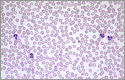
A complete blood count (CBC) test gives your doctor important information about the types and numbers of cells in your blood, especially the red blood cells and their percentage (hematocrit) or protein content (hemoglobin), white blood cells, and platelets. The results of a CBC may diagnose conditions like anemia, infection, and other disorders. The platelet count and plasma clotting tests (prothombin time, partial thromboplastin time, and thrombin time) may be used to evaluate bleeding and clotting disorders.
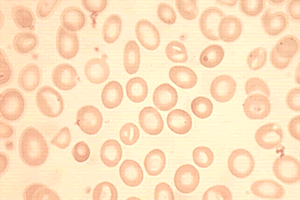
Your doctor may also perform a blood smear, which is a way of looking at your blood cells under the microscope. In a normal blood smear, red blood cells will appear as regular, round cells with a pale center. Variations in the size or shape of these cells may suggest a blood disorder.
Where Do Blood Cells Come From?
Blood cells develop from hematopoietic stem cells and are formed in the bone marrow through the highly regulated process of hematopoiesis. Hematopoietic stem cells are capable of transforming into red blood cells, white blood cells, and platelets. These stem cells can be found circulating in the blood and bone marrow in people of all ages, as well as in the umbilical cords of newborn babies. Stem cells from all three sources may be used to treat a variety of diseases, including leukemia, lymphoma, bone marrow failure, and various immune disorders.
Task
Students will learn about the four blood types and why a blood transfusion is possible only between certain types (O is the universal donor, but can only receive from O, A can receive from A or O, B can receive from B or O, AB can receive from A, B, AB and O).
Students will “mix” blood types using colored water and see what results.Your job in the webquest is to know what blood type is, the different types of blood types, you will learn about blood transfusions, carry out an experiment and answer a set of questions once the experiement is completed
Process
1. Students must work together in pairs (2) - Will be assigned
Next they will:
1. Make a small cup of yellow water, label “Blood Type A”
2. Make a small cup of blue water, label “Blood Type B”
3. Make a small cup of green water, label “Blood Type AB”
4. Pour a small amount of plain water into a cup, label “Blood Type O”
5. Pour a small amount of one of the blood types into an empty cup (recipient). Add a second blood type to it (donor), simulating a “blood transfusion”.
6. Notice the results and record on the data table. A color change indicates that the transfusion failed. (In a real blood transfusion, this failure would be evidenced by agglutination of the red blood cells.)
After the experiment is done the following table must be completed and all questions must be answered:
| Blood Type #1 (Donor) | Blood Type #2 (Recepient) |
Observations |
Successful Transfustion? (Color Change indicates a failure) |
Based on the experiment and research:
1. What transfusions were successful? How do you know?
2. One of the blood types is considered a universal donor. Which blood type is this? How do you know?
3. One of the blood types is considered a universal recipient. Which blood type is this? How do you know?
4. Why is it important to know an individual’s blood type?
Resources
Use the following links to assist with objectives/questions:
https://www.youtube.com/watch?v=KXTF7WehgM8
http://www.nhs.uk/conditions/Blood-groups/pages/introduction.aspx
Evaluation
Students will be evaluated out of 9
| Criteria | 1 | 2 | 3 |
| Collaboration Skills (Teamwork) | Poor | Satisfactory | Very Good |
| Research | Research is complete | Research is somewhat complete | Research is complete |
| Content | Lack of imformation | Information is somewhat complete | Information is complete |
Conclusion
On this webquest you would've learned about blood, blood types, the history of blood types, blood transfusions and the importance of knowing your blood type.
Credits
Teacher Page
What are the benefits of WebQuests?
Using WebQuests in the classrooms can help build a solid foundation that prepares students for the future.
WebQuests increase student motivation. When students are motivated, they are likely to put in more effort, and their minds are more alert and ready to make connections.
In WebQuests, students use real, timely resources instead of dated textbooks and materials that are only presented from one point of view.
WebQuests are often cooperative in nature, requiring students to take on roles where they are part of a team that must accomplish the task.
How did WebQuests start, and how have they developed since they became popular?
Dr. Bernie Dodge, professor of educational technology at San Diego State University, developed and named the concept while teaching a class for preservice teachers in the spring of 1995. He wanted to give his student teachers a format for online lessons that would make the best use of student time while fostering higher-level thinking skills.
Soon after, Tom March, working at San Diego State as a fellow funded by Pacific Bell, developed the first fully developed WebQuest as part of PacBell's Knowledge Network
Dr. Dodge wrote a paper on the topic, "Some Thoughts About WebQuests". The paper was widely read, and many teachers started to adopt the technique.
Staff developers at schools and teacher educators at universities were using the WebQuest Page as a source of training materials and ideas for their own courses. As the WebQuest Page grew, it developed links to WebQuests created all over the English-speaking world.
What are the essential parts of a WebQuest?
Introduction:
The introduction section provides background information and motivational scenarios like giving students roles to play. It also provides an overview of the learning goals to students.
Task:
The task is a formal description of what students will have accomplished by the end of the WebQuest.
First, the teacher finds resources for a particular topic on the Web. Then, the teacher devises an activity for the students that incorporates the information from the various sites. This task should be doable and interesting.
Process:
This is a description of the steps learners should go through in accomplishing the task, with links embedded in each step.
Resources:
This section of the WebQuest consists of a list of the resources that students will need to complete the task.
In older WebQuests, resources will be listed in a section of their own. More recent WebQuests have the resources embedded within the Process section, to be accessed at the appropriate time.
Evaluation:
Each WebQuest needs a rubric 1 for evaluating students' work. The standards should be fair, clear, consistent, and specific to the tasks set. Many of the theories of assessment, standards, and constructivism apply to WebQuests: clear goals, matching assessments to specific tasks, and involving the learners in the process of evaluation are all concepts from earlier workshops that apply here.
Conclusion:
This step allows for reflection by the students and summation by the teacher.During the concluding section of a WebQuest, students are encouraged to suggest ways of doing things differently to improve the lesson.
What kinds of topics lend themselves to WebQuests?
The best use of the WebQuest format is for topics that are less well-defined -- tasks that invite creativity and problems with several possible solutions. They can address open-ended questions like:
What should be done to protect America's coral reefs?
What kinds of people were most likely to survive the sinking of the Titanic? Why?
What do I need to create a WebQuest?
Once designed and set up, a WebQuest is really just a Web page in a particular format. A Web editor is the only specialized equipment needed to get started.
You'll also need to have a Web server 1 available to post 2 your WebQuest. Most school districts and many individual school sites have servers available for teachers. However, a server is not an absolutely critical requirement. If you don't have server space, you can copy your WebQuest onto the hard drive of each of your students' computers. Then, run the WebQuest on a browser like Netscape or Internet Explorer.
What are some critical perspectives?
Finding the time is the biggest obstacle to designing your own WebQuests. Your first attempt requires that you learn to use some new tools, and some teachers simply can not find enough spare hours to pull it off. The benefit, though, is that once you have made your WebQuest, most of your work is done. Once that occurs, you no longer have to worry about daily lesson plans or scintillating lectures. Relieved of the burden of being the main source of new information, you instead work with your students as a coach, thinking on your feet. Many teachers find that they like this role better than being the "sage on center stage."
WebQuests also require that students have a certain level of reading ability, unless one is careful to find highly visual sites or has an adult available who is willing to read the screens to the students. This means it's harder to create a good WebQuest for children younger than the third grade or for those with language or reading difficulties. Again, these limitations can be overcome by paying special attention in your design of group work, but it is a harder fit.
How can I use WebQuests in conjunction with other educational techniques?
WebQuests are based on the ideas of inquiry and constructism. WebQuests also incorporate cooperative and collaborative learning, since students work on projects in groups. These concepts can play a role in teaching with WebQuests.
WebQuests can also help students meet standards focused on critical-thinking and analysis skills, and may be particularly useful for social studies and science. By using multimedia, WebQuests also help with multiple intelligence work. Alternative kinds of assessment can be used to judge the results of WebQuest projects. WebQuests are one way to use the Internet in education.
WebQuests are tools, not educational theories, so they can be used in virtually any classroom with appropriate computer access.