
Introduction
CONGRATULATIONS! You have just been granted a free trip to our solar system. A famous astronomer came to you and offered you his rocket ship for the day. He provided you with enough gas to get to space, travel to all 8 planets, and get back. So, you pack your bags and are ready to go. What will you learn about the planets along the way? Will you discover anything new while in space? Hop on board and let's find out. 1..2..3..BLAST OFF!!

Task
While exploring our Solar System you will discover a new planet. You will bring back your findings about this planet to share with the world. You will also create a model of the planet as a visual aid for what the planet looks like.

Process
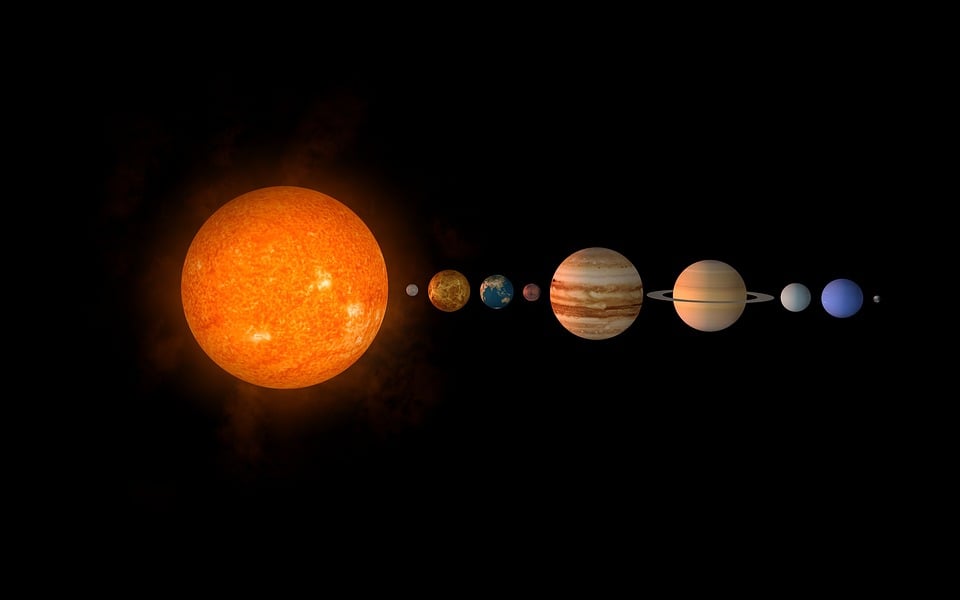
It is now time to start your journey through space. You will visit each planet and answer the set of questions provided about each planet. While in space you will discover a new planet and bring back your findings about this planet.
Task 1: You will explore each planet in our Solar System starting with Mercury, the closest planet to the sun, and finishing with Neptune the furthest planet from the sun. For each planet you need to record in your science journal the answer to each of the following questions:
-
How far is the planet from the sun?
-
How long is a year on this planet?
-
What is the planet's atmosphere like?
-
What is the planet's surface like?
-
What is the planet's weather/temperature?
-
How long is a year on this planet?
-
Does the planet have moons? How many?
-
Does the planet have rings?
-
One interesting fact about the planet.
Here are some resources to help you find the answers to the questions:
Here is a video you can watch to further you knowledge about the planets:
Task 2: Now it is time to review your questions. Take some time to compare and contrast the planets. In your journal, you will now sort the planets into terrestrial planets and gas giants.
Task 3: You will now create your own planet. Remember this is the planet that you discovered while in outer space. You will need to report the following about your planet:
-
Distance from the sun
-
Atmosphere
-
Weather/Temperature (remember this should correlate with how far it is from the sun)
-
Surface
-
Moons
-
Rings
-
Interesting fact
You will then create a model of your planet using the resources provided in the science area. Remember your model should correlate with the facts you reported.
Evaluation
| Beginner Astronaut | Jr Astronaut | Senior Astronaut | |
|---|---|---|---|
| Report |
A few of the requirements were found.
|
Most of the requirements were found. | All of the requirements were found and correlated with each other. |
| Model | There was no model represented. | The model did not correctly represent the findings reported. | The model was presentable and correctly represents the findings reported. |
| Presentations | Did not present in front of the class. |
Good presentation voice Did not use eye contact little to no organizations |
Good presentation voice Eye contact Showed practice and organization. |

Conclusion
You have now come to the end of your journey. I hope you had an awesome time on your journey through space. In this WebQuest you traveled to all 8 planets and found out interesting facts about all. You also discovered a new planet while there and brought back your findings on this new planet.
I hope you enjoyed this adventure and want your feedback now. If there is anything I could change about this WebQuest to improve it, I want you to write it on the feedback slips and turn it into the basket

Credits
Sources:
https://pixabay.com/en/space-shuttle-atlantis-liftoff-600502/
https://pixabay.com/en/sun-mercury-cosmos-star-1459704/
https://pixabay.com/en/sun-planet-solar-system-cosmos-1506019/
https://pixabay.com/en/solar-system-planets-space-mercury-566537/
https://pixabay.com/en/space-shuttle-start-discovery-11089/
Teacher Page
This WebQuest should teach student's how to research information through the web. They will be able to explore the websites provided and find the answers to their questions. Some questions will require some extensive searching, but all can be answered with the websites provided. The student's have the opportunity to learn about the planets in our Solar System and then use that knowledge to create their own planet. This touches on higher order of thinking.
Standard:
S4E1. Obtain, evaluate, and communicate information to compare and contrast the physical attributes of stars and planets.
d. Evaluate strengths and limitations of models of our solar system in describing relative size, order, appearance and composition of planets and the sun. (Clarification statement: Composition of planets is limited to rocky vs. gaseous.)