
Introduction

When it comes to the most versatile part of speech in a sentence, you could say verbs rule. You can make an entire sentence out of one verb. For example, “Stop!” See, that’s a sentence! You can’t make a sentence with any other part of speech. Nouns cannot make a one-word sentence, nor can adjectives, adverbs, or any other part of speech.
But verbs do have something in common with nouns. Like nouns, there are different kinds of verbs. There are action verbs, linking verbs, helping verbs, regular verbs and irregular verbs. Let’s take a look at action verbs.
ACTION VERBS
Identifying an action verb is really pretty easy.
Walk! Run! Cough! Drink!
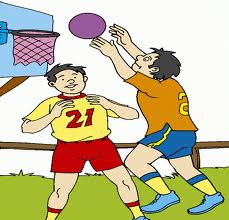
All of these words show some kind of action. They express something that a person, animal, or object can do. That’s why we call them action verbs.
Task






Process
PRESENT VERBS
•An action verb that describes an action that is happening now is called a present tense verb.
Example:
The bird flies in the sky.
Flies is a present tense verb because it is happening right now.
•>Many present tense verbs end with s, but some end with es, or ies.PAST VERBS•Verbs which tell about actions which happened some time ago are past tense verbs.
Example:
The baby wanted some milk.
Wanted is past tense verb because the action already happened.
•>Many past tense verbs end with ed, but some end with d, or ied.FUTURE VERBS•Verbs which tell about actions which are going to happen are future tense verbs.
Example:
Laura will make a cake.
Will make is a future tense verb because the action has not yet happened.
•>Future tense verbs use special words to talk about things that will happen: will, going to, shall, aim to, etc.
Evaluation
Evaluation:
Use the following action verb words in a sentence.
1.Play2.Climbed3.Sing4.Will fix5.Draw6.Run7.Jumped8.Fly9.Walk10.Will hike
Conclusion
Action Verbs
Action verbs are verbs that specifically describe what the subject of the sentence is doing. These types of verbs carry a great deal of information in a sentence and can convey emotion and a sense of purpose that extends beyond the literal meanings of the words. A sentence like "The band appeared on the scene" sounds much more less impressive than the sentence "The band erupted onto the scene." The power of the action verb lies in the meaning and intention that they contain and how they bring direction and force to the sentence. Understanding the types of action verbs will make students better writers and communicators.
Credits
Members:
Verzo, Jhon Jhon P.
Cilos, Stephannie B.
Prestosa,Ayenn F.
Rivero, Christine Joy I.
REFERENCES
*http://www.k12reader.com/term/action-verbs/
*https://www.google.com.ph/search?q=action+verbs&newwindow=1&source=lnms…

*https://www.google.com.ph/search?newwindow=1&biw=1366&bih=659&tbm=isch&…

*https://www.google.com.ph/search?newwindow=1&biw=1366&bih=659&tbm=isch&…
