
Introduction

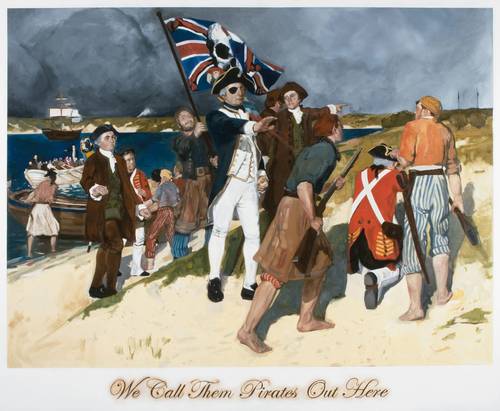
Landing of Captain Cook at Botany Bay, 1770
Objectifs Lexique /fêtes nationales – célébration – festivités – commémoration – controverse – opinion – débat – quantifieurs
Fait de langues:verbes-prepositionnels
Culture:Australia Day vs Invasion Day _villes-Australiennes-le peintre Daniel Boyd
-
ÉTAPE 1 Ouverture Peinture de D. Boyd vidéo Reportage sur Australia Day ➥ Worksheet 32 (mots croisés) fêtes nationales – célébration – festivités – commémoration – controverse – opinion – débat – quantifieurs
-
ÉTAPE 2 Britain’s penal colony: Cartoon de R. Brand Chronologie Podcast sur l’histoire de l’Australie Photo de The Secret River Texte littéraire de K. Grenville
-
Objectifs lexique:colonisation – navigation – déportation – travail forcé – sentiments – paradoxe – opinion
-
Fait de langues:voix passive – prétérit et past perfect – terminaison en -ed
- Culture:histoire de l’Australie – aborigènes et colons – cartoon de Reuben Brand – colonie pénitentiaire – vie des détenus – Commonwealth – série et roman The Secret River
ÉTAPE 3 Commemorations: Photo du Road Builders Memorial Inscription du Road Builders Memorial Interview sur les ancêtres du pays Photo de manifestants Article de presse vidéo Interviews sur la signification de Australia day
Objectifs lexique:commémoration – revendication – mémoire – accord / désaccord – suggestion
Fait de langues:voix passive – should – cause
Culture:Road Builders Memorial – NouvelleGalles du Sud – détenus – lutte des aborigènes
People respond to Australia day
Australia Day: Why celebration has become controversial
Australia celebrates its national day on 26 January, but in recent years it has become an increasingly heated subject.
The BBC's Hywel Griffith explains why not everyone will be joining in the fun on Thursday.
https://www.bbc.com/news/av/world-australia-38740655
Task
Process
Créez votre propre carte mentale à partir de ce que vous avez vu en classe. Vous pourrez ensuite l’enrichir à l’aide de celle-ci. Écoutez les mots et répétez-les pour bien les prononcer. Écrivez-les aussi plusieurs fois pour mémoriser leur orthographe
file:///C:/Users/JACKIE/Downloads/733644_U11_180_carte_mentale.pdf
Quizlet-Australia Day (s)https://quizlet.com/skysthelimit1re/folders/stl-u11-australia-days/sets
Strategy-participer à un débat :file:///C:/Users/JACKIE/Downloads/733644_U11_182_strategy%20(1).pdf
Evaluation
Final project Your project: Take part in a debate,
Take part in a debate: Should Australia Day be changed? Prepare your project Debate whether it was better to be transported to Australia for a crime or to stay in prison. Strategy Participer à un débat 5(process).
Conclusion
Script vidéo Text: Australia Day:
A date that divides a nation Reporter: It’s the day when a nation is meant to celebrate itself: every year Australia Day lands on 26th January, marking the landing of the first British fleet here in Sydney 229 years ago. It’s a public holiday many choose to spend in the pub, at parties, at beaches or at barbecues. However they want to celebrate the Australian way of life. Woman: It’s obviously celebrating how great our country is, how fun it is, how lucky we are to live here, getting together with family and friends. Young man: Yes exact same thing, backyard cricket, barbecue. Woman: It means, that’s the day we took over a country that didn’t belong to us. Reporter: For some January 26th simply isn’t a date they can celebrate. It has become known as Invasion Day: the anniversary of when Australia’s aboriginal and indigenous communities started to be oppressed and dispossessed of their lands. Some want Australia Day scrapped. Many others want it moved to another day of the year.
Script vidéo Voice: Australia Day…
Woman: Australia Day, an interesting one.
Text: Aboriginal Australian’s respond to “Australia Day”.
Man: Australia day, what is Australia Day? Man 2: Don’t you mean: “Invasion Day”?
Man 3: It means different things to different people. For us it means survival. Woman 2: Invasion Day. Our survival.
Man 2: Survival Day. Man: Celebrations of survival of one of the oldest cultures, if not the oldest culture on earth.
Woman 3: Racism. Man4: I think a joke. Child: It’s really sad.
Man: My gut drops.
Man: The fact that they celebrate that day that we lost all that we had? Yeah, it pisses me off.
Woman: It’s insensitive to say the least. Man: An offense. Man: It’s everything at once.
Man: Brotherhood, sisterhood, clan, mob, strength. Woman: It does bring up a lot of hurt, a lot of heartache.
Man: It’s like somebody that comes into your house, does horrible things to your family, and they’re like, ah dude, we’re gonna like have like a party, and a barbecue and like listen to Triple J (JJJ), yeah and we’re gonna put it on the date we turned up, and you’re like, that’s kind of sadistic, man. Like, why would you do that
Child: People celebrating the day that your people got slaughtered and invaded, and the day that caused all that destruction, and all that suffering to very peaceful people.
Woman: For a lot of Aboriginal people and Australian islanders, it’s a day of mourning.
Man: It’s the day that marks the beginning of the massacres.
Woman: It’s celebrating rape, it’s celebrating murders. Woman: I celebrate so many things about being here, about how beautiful this country is, but at the same time there’s a dark and disconnected culture.
Man: I think that our country is a great country. It’s beautiful and there are a lot of opportunities here. I feel that celebrating Australia Day on 26th January is wrong. That doesn’t make any sense.
Man: The first of January 1901 was when the states federated to become a country. It was loosely called Australia before then. It became official, this was now the nation called Australia, the Commonwealth of Australia. That should be Australia Day.
Man: If it’s truly a celebration of what we are as a nation, then we need to include the first nations of this country. Woman: A day that we could all celebrate. Man: I’ll help you celebrate it if you like.
Woman: We’re quite inclusive people, so we just want to be included as well. Woman: Maybe you should celebrate Australia as a whole, and as it was before, and think about who’s included in that culture when you’re celebrating
Credits

David Boyd
Australian artist
Description
David Fielding Gough Boyd OAM was an Australian artist, and a member of the Boyd artistic dynasty. Wikipedia
Born: August 23, 1924, Murrumbeena, Australia
Died: November 10, 2011, Sydney, Australia
Artworks: Flinders Ghost, Children by the River, MORE
Education: National Gallery School
Daniel Boydhttps://www.mca.com.au/artists-works/artists/daniel-boyd/
Born 1982, Cairns, Queensland. Lives and works Sydney, New South Wales.
Daniel Boyd reinterprets Eurocentric perspectives of Australian history, often appropriating images that have played significant roles in the formation and dissemination of that history.
Boyd has appropriated portraits of colonial figures such as Captain Cook, Governor Phillip and King George III and accessorised these heroes of empire with pirate eye patches, parrots and necklaces of skulls. Boyd has said, ‘Questioning the romantic notions that surround the birth of Australia is primarily what influenced me to create this body of work. With our history being dominated by Eurocentric views, it is very important that Aboriginal and Torres Strait Islander people continue to create dialogue from their own perspective to challenge the subjective history that has been created.’1
Boyd has exhibited his work nationally and internationally since 2005. Selected group exhibitions include All the World's Futures, 56th Venice Biennale, Venice (2015); Moscow International Biennale for Young Arts: A Time for Dreams, Moscow (2014); Bungaree: The First Australian, Lake Macquarie City Art Gallery, Lake Macquarie (2013); The 7th Asia Pacific Triennial of Contemporary Art, Queensland Art Gallery | Gallery of Modern Art, Brisbane (2012); One Caption Hides Another, Bétonsalon, Paris (2011); We Call Them Pirates Out Here, MCA, Sydney (2010); Contemporary Australia: Optimism, Queensland Art Gallery | Gallery of Modern Art, Brisbane (2008); and Culture Warriors: National Indigenous Art Triennial, National Gallery of Australia, Canberra (2007).
In 2010 Boyd was commissioned by the Queensland Government Public Art Fund to produce a major sculptural work, Seven Versions of the Sun, installed in Kangaroo Point Park, Brisbane.
Boyd’s work is held in the collections of the Natural History Museum, London; National Gallery of Australia, Canberra; Tasmanian Museum and Art Gallery, Hobart; National Gallery of Victoria, Melbourne; Art Gallery of New South Wales, Sydney; as well as numerous private collections in Australia.
1 Daniel Boyd, artist statement for Culture Warriors: National Indigenous Art Triennial, National Gallery of Australia, Canberra, 2007.
From the MCA Collection Handbook
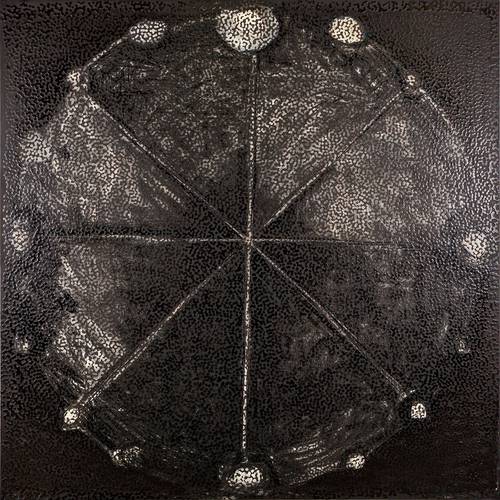
Daniel Boyd draws on his Aboriginal heritage as a Kudjla/Gangalu man from North Queensland to bring an alternative lens to bear on the images that have constructed Australia’s foundational myths. His painting We Call Them Pirates Out Here (2006), for example, mocks the official history of white exploration and settlement by suggesting that one person’s explorer is another person’s pirate. Untitled (2014), a wall work, is a cosmological map of the night sky, referencing the stars that form the basis of Aboriginal creation stories and the navigational maps used by Western explorers. Although very different in style, both works weave together disparate cultural perspectives and experiences, retelling Australian history and place from an Aboriginal perspective.
For Untitled Boyd stuck 18,000 circular mirrored disks to a black wall in the MCA’s harbourside foyer. Like stars scattered across the night sky or subatomic particles comprising the dark matter of the universe, these reflecting lenses point towards our incomplete understanding of time, space and memory. Their mirrored surfaces, reflecting the activity in the foyer and the Circular Quay foreshore, are ever changing. For Boyd, a driving element of the work was the inability to comprehend the full extent of the history of the significant site on which the MCA is located, while acknowledging the length of human interaction with its landscape, before and after colonisation.
In We Call Them Pirates Out Here Boyd addresses the role in Australian history of the myths of discovery and settlement. The painting appropriates a seminal representation of Australia’s founding as a nation: The Landing of Captain Cook at Botany Bay 1770 (1902) by Emanuel Phillips Fox. This history painting depicts a wholly European perspective on the inauguration of relations between the British visitors and the local Aboriginal men of Botany Bay. In a post-Federation display of nationalistic projection, it shows Captain Cook stepping onto Australian land as part of a shore party, heroically interceding between the threatening local men who brandish spears and his own marines who aim to shoot them. Behind him billows the red naval ensign, bestowing on the scene the rhetoric of the planting of flags and the staking of territory. In the single gesture of Cook’s stance – one hand on his sheathed sword and the other raised in calming authority – Phillips Fox constructs a fanciful drama of British valour subduing resistance and claiming ownership of a continent.
In Boyd’s retelling, Cook is the antihero of an opposing narrative. Depicted as a marauding pirate with an eye patch, Boyd’s Cook claims unlawful possession of the land with his skull-and-crossbones Union Jack, reframing the landing as a moment of invasion and pillage for the original inhabitants. In Boyd’s update, the warriors are replaced by two unthreatening Xanthorrhoea grass trees, called ‘black boys’ by the colonists. Cook’s heroic gesture of salvation is thus emptied of meaning and we see the scene as an opportunistic land grab founded on the one-eyed myth that the country was uninhabited. In this work, as in Untitled, Boyd reveals the multiple connections to landscapes and events in Australian history, challenging the white perspective which has so far told their stories.
Nicola Teffer
Dr Nicola Teffer is a writer and curator, and contributing editor of MCA Collection Online.
Works by Daniel Boyd
MCA Collection
We Call them Pirates Out Here, 2006
MCA Collection

MCA Collection