
Introduction
Corals are tiny sea animals living in colonies. They do not move. They remain fastened to rocky sea floors in warm, clear, fairly shallow water.
The tiny sea animals known as true corals often form colonies that are attached to rock of reefs. The individual animal stays here during its lifetime; often it dies, the skeleton remains. New corals grow above them. This process goes on and on until large buildings of corals are formed. The coral building is called “coral reef”.
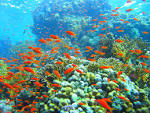
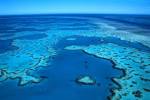
When coral colonies grow close to the share they form the fringing reefs. Fringing reefs move slowly away from the shore. This is because a coral reef grows mainly towards the ocean side. At this side, the ocean waves bring the coral water and food. As the fringing reef continues to grow ocean ward, it becomes a barrier reef. An example of a barrier reef is the Great Barrier Reef of Australia. It is about 2000km long and 150km wide.
Task
1. Get 1 whole sheet of paper.
2. Observe and examine these corals.
3. Write your observations in a table like this.
|
Common Characteristics of Coral Remains |
4. Study the pictures of live corals.
5. Compare the skeletons of sample corals with pictures of live corals.
Process
1. Let the pupils go to the Science Laboratory.
2. Display some coral skeleton on the table.
Evaluation
1. What kind of organisms are the corals?
a. Sea plants b. Sea animals
c. Calcified rocks d. Marine rocks
2. In w/c kind of water does the coral grow?
a. Clean, shallow, and warm b. Clear, deep, and warm
c. Muddy, shallow, and cool d. Polluted stagnant water
3. Which of these describes a coral reef?
a. Large buildings of corals b. Shell remains of corals
c. Skeleton of sea animals d. Large sea plants
4. What is formed when coral colonies grow close to the shore?
a. Fringing reef b. Barrier reef
c. Coral atoll d. Coral rocks
5. How do coral reefs move?
a. Away from the shore b. Forward the shore
c. Forward the river d. Away from home
Conclusion
Coral reefs are important to the country’s fisheries resource. They serve as nursery areas for young fish or hatching grounds for other marine animals like shells and etc. It is estimated that coral reefs yield 10 to 15 percent of the total yearly fish production of the country. Coral reefs also yield edible vertebrates and sea weeds coral reefs also provide materials for construction of roads, buildings, and churches. However, excessive extraction of corals could decrease the ability of the coral reefs to protect the shores. Coral reefs protect the shorelines by acting as wave breakers. Sandy beaches are formed could erode and disappear without the coral reefs.
Credits
Information Resources
1. The World Bank; Philippine Summary on Coral Reefs.
2. Prentice Hall Inc. Englswood cliffs; Physical science New jersey. (Teacher Resource Book) Copyright 1988.
Teacher Page
Presented by:

Name: Hargie Morales Galido
Birthday: September 20, 1995
Address: Sunrise Village, Isabela City
Cell no. 09358463718