
Introduction

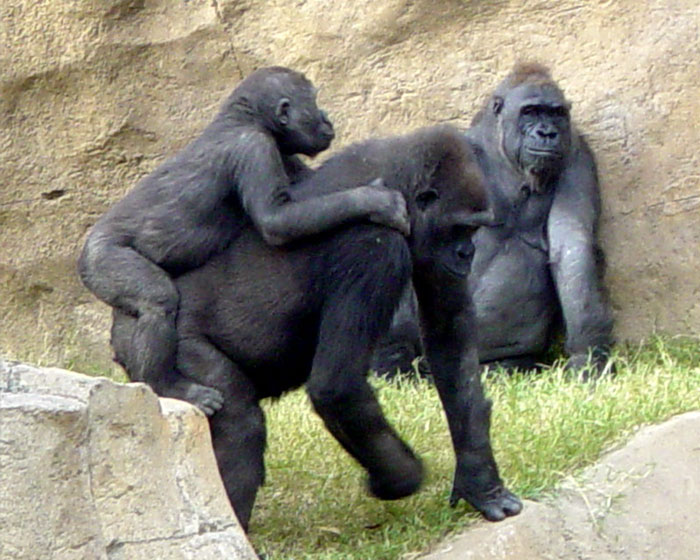


After working at the local zoo for a few months, the head zookeeper (your teacher) has asked you to create a model of an animal's life cycle to display for visitors so that they can learn more about how different animals are born, grow, reproduce, and die. Additionally, you will be required to explain how and why the animal you have been assigned by the zookeeper (your teacher) does or does not form a group to help the members of the species survive.
You will be working with your fellow zoo interns in groups of 3-4 to research and present on the animal the zookeeper (your teacher) assigns you. You will then create a model,which can be either virtual or physical, to present to the zoo visitors (your classmates) to teach them about the life cycle and group tendencies of the animal you have researched.
Have fun and happy learning!
Task
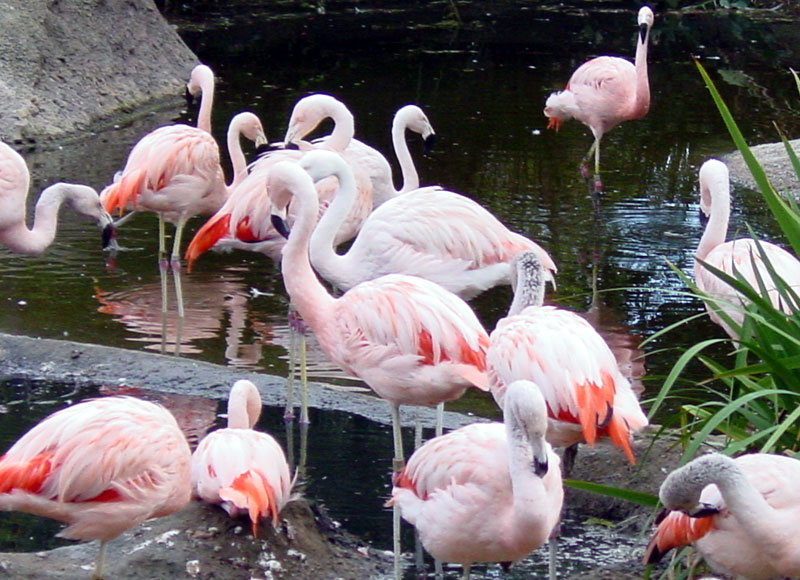
Your task as the zoo intern will be to research the life cycle of the animal the zookeeper (your teacher) assigns you. Once your team has finished your research and filled out your graphic organizer detailing the birth, growth, reproduction, and death of your animal species, you will create a model to represent this life cycle. You will also be required to describe if, how, and why your species forms groups to aid in the survival of the species. The model that you will create can be done on either PowerPoint or as a physical diorama, but your model must include all the elements in the rubric. If you find a better resource/website to create your model and would like to use it, please ask the zookeeper (your teacher) first. Once you have created your model, your group will present your findings to the zoo guests (your classmates).
Process
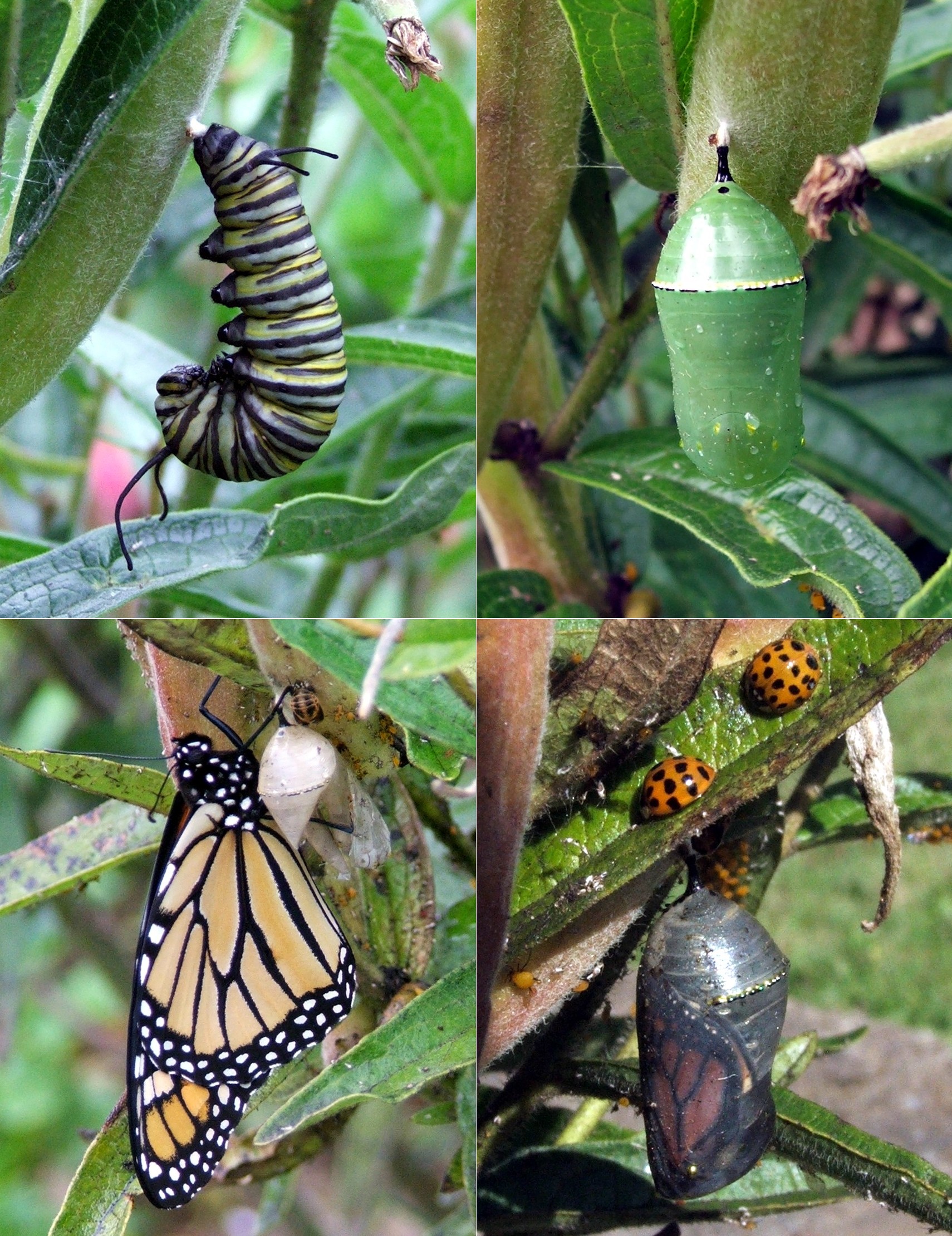
IMPORTANT NOTICE: Remember you have been entrusted by the local zoo to obtain complete and accurate information in order to create a model of an animal's life cycle and description of its group tendencies for species survival. Be sure to read the directions very carefully and check out the Evaluation page so you are clear on the expectations!
Day 1 - Research Day
1. Once you know who you will be working with, what animal you will be researching, and the zookeeper (your teacher) has given you the list of resources (videos, websites, interactive tools, etc.) she wants you to use, each member of your group should decide who will be researching, creating, and presenting on what topic. The topics to choose from in the life cycle of the animal will be: birth, growth through the life span, reproduction, and death of the animal. Additionally, your group will have to decide who will be researching if, how, and why your animal forms groups to aid in the survival of the species.
2. Once each person knows what they will be doing, you may begin doing your research using the sources that the zookeeper (your teacher) has provided you. REMEMBER: If you find a different source to use information from, keep in mind our guidelines and requirements of how to find a reputable and trustworthy source to use for research. While you are conducting your research, make sure you are filling in your graphic organizer with the information and source of where you found it, so that you remember all that you learned.
3. When each member of your group finishes their research, each person will share with the rest what they found so that each person has the entire graphic organizer completed.
4. If, and when, you finish with the research and filling out the graphic organizer, your group may use the resources provided to create a 3D physical model of your animal's life cycle. If your group decides, you may also use Google Slides to create a 2D visual version of your animal's life cycle. If you would like to use some other technology/resource/media to create your model, just ask the zookeeper (your teacher) to see if it available and you are able to use it. When you are working on your model, make sure to also include your findings on the group tendencies of your animal.
Day 2 - Model Construction Day
1. If you have not already started on your visual portion of your animal's life cycle and group tendencies, you will now do so.
2. If, and when, your group finishes with your model of the animal's life cycle, you may begin practicing how and what you will be presenting on our class zoo field trip. Make sure to be able to remember everything you learned without having to look at your notes and model too often.
Day 3 - Zoo Field Trip Day
1. This is the day your group will present on what you learned about your animal on the first day, as well as the model you created yesterday.
2. While other groups are presenting, you will be taking notes on what they found so that you can remember the information in the future.
3. Once all groups have completed, the zookeeper (your teacher) will ask you to write down what each person in your group did to create your project. You will also fill out the rubric evaluation for each member in your group to let the teacher know how much each person contributed to your group work. Once you have evaluated each member in your group, you will then evaluate yourself on how well and how much you think you contributed to the group. Please be honest and include what areas you were successful at and what you could improve on because if you do not include anything you could improve on, you may be graded lower and it will not allow you to work on something to become better in the future.
Evaluation
| # | Does Not Meet Expectations | Nearly Meets Expectations | Meets Expectations | Exceeds Expectations | Score |
|---|---|---|---|---|---|
| Animal Life Cycle Research Graphic Organizer | Information is incomplete and/or includes only a 1 fact for each section. Numerous grammar & spelling errors. Incomplete sentences or bullets. Difficult to read/illegible. | Information includes only 2 facts for each section. Incomplete sentences or bullets. Some grammar & spelling errors. Handwriting could be neater. | Information includes only 3 facts for each section. Written in complete sentences. Few spelling & grammar errors. Neatly written or typed. | Information is thorough and includes at least 4 facts for each section. Written in complete sentences. Correct grammar & spelling. Neatly written or typed. | 25 |
| Average of group work scores (see separate rubrics and handouts for details) | Average of teacher group work grade, peer-evaluation, and self-evaluation was at least 60%. | Average of teacher group work grade, peer-evaluation, and self-evaluation was at least 70%. | Average of teacher group work grade, peer-evaluation, and self-evaluation was at least 80%. | Average of teacher group work grade, peer-evaluation, and self-evaluation was at least 90%. | 25 |
| Group Presentation and Model (for more detail and specifics on individual and group effort on both, see separate rubrics and handouts) | Group does not demonstrate high level of knowledge about animal life cycle and group survival tendencies. Explanation of findings is ONLY reading text on model. Model demonstrates little effort/missing, and/or is not related to animal/life cycle/group tactics. | Group demonstrates limited knowledge about animal life cycle and group survival tendencies. Explanation of model is mostly reading text. Model demonstrates some effort and is somewhat related to animal/life cycle/group tactics. | Group demonstrates knowledge about animal life cycle and group survival tendencies. Explains model and group tactics, at times reading from model. Model demonstrates effort and is directly related to animal/life cycle/group tactics. | Group demonstrates high level of knowledge about animal life cycle and group survival tendencies. Explains model and group tactics without having to read text on model. Model demonstrates great effort & creativity, and is directly related to animal/life cycle/group tactics. | 25 |
| Active Listening during presentations and presentation notes graphic organizer | Did not actively listen to the presentations of other groups. Was talking, disruptive, or distracted during all or most presentations. Did not ask any questions of any of the other groups. Information is incomplete and/or includes only a 1 fact for each section. Numerous grammar & spelling errors. Incomplete sentences or bullets. Difficult to read/illegible. | Actively listened to presentations of other groups only a small portion of the time. Was talking, disruptive, or distracted during some of the presentations. Asked at least one question of another group, but it was a question that had already been answered. Information includes only 2 facts for each section. Incomplete sentences or bullets. Some grammar & spelling errors. Handwriting could be neater. | Actively listened to presentations of other groups most of the time. Was talking, disruptive, or distracted during only one or two presentations. Asked at least one question, but it was on something trivial or surface level. Information includes only 3 facts for each section. Written in complete sentences. Few spelling & grammar errors. Neatly written or typed. | Actively listened to all the presentations of the other groups. Was not talking, disruptive, or distracted during any of the presentations. Asked at least one thought-provoking, deep question for one of the other groups. Information is thorough and includes at least 4 facts for each section. Written in complete sentences. Correct grammar & spelling. Neatly written or typed. | 25 |
| Total | 100 |

Conclusion


Congratulations! You accomplished the task the zookeeper asked you to do, and you did so with flying colors! The work you have done in creating a model of the life cycle of one animal species will be displayed by the information already provided that details the life, workings, and ancestry of your animal. Now any visitors to the zoo will be able learn even more about each animal, all thanks to your hard work! You are now an expert on the life cycle and group survival tactics of your animal species and you will present this information to visitors. On our zoo field trip, you will also have a chance to learn more about other animals and their life cycles and group survival tactics. You will be given a special animal life cycle booklet to collect this information for each species. Be sure to pay close attention and take great notes on our zoo field trip day, including asking one good question to another group, as we will do some special activities in the future to demonstrate the similarities and differences among the different animal species.
Reflection
If you have not done so already, now is time to reflect on how you did - both individually and as a team.
1. Each team member should complete his/her own Cooperative Learning - Self Reflection form that will be handed out.
2. Each team member should complete the group member reflection sheet that will be handed out for EACH member of your group, including writing down what you believe each person did to finish the assignment.
3. Each team should complete one Cooperative Learning - Group Reflection form together that the zookeeper (your teacher) will give you.
Credits
Special thanks to Celina Manville in guidance from her WebQuest found at http://zunal.com/webquest.php?w=390354, especially in regards to her rubric, and her teachers page.
Pictures included in Web Quest are from Pics4Learning website: www.pics4learning.com. **"Pics4Learning is a curated image library that is safe and free for education. Teachers and students can use the copyright-friendly photos and illustrations for classroom projects, web sites, videos, portfolios, or any other projects in an educational setting."**
Teacher Page

Time allotted: Three 45 minute class periods (One for research/to start working on model, one to finish the model, and one for group presentations).
Lesson Overview:
This lesson will allow students to research, learn about, and present to the class their findings on the life cycle and group tendencies of an assigned animal species. The students will participate in group work to research the life cycle and group tendencies of their species, as well as create a model to represent the cycle and tendencies. Groups of students will also present to the class their findings. Groups will discover the birth, growth, reproduction, and death characteristics of the assigned species to be able to compare and contrast the life cycles of different animals to demonstrate that some animals are similar and different in their life cycles, as well as group survival tactics. This lesson has been designed to assess prior knowledge of students and will show them the basic life cycles of different animals, as well as being able to utilize skills to create a group model of the life cycles. Students will become comfortable identifying the stages and characteristics of the life cycles of different animals, as well as explaining how and why different animals form groups to aid in the survival of the species. The strategies being used is the information processing and the social family models of teaching.
This Webquest meets the following learning standards:
Diocese of Grand Rapids Office of Catholic Schools Curriculum Standards for Science in grades K-12:
3.Sci.LS.1 Develop models to describe that all organisms, as God’s creation, have unique and diverse life cycles but all have in common the fundamentals of birth, growth, reproduction, and death.
3.Sci.LS.2 Construct an argument that some animals form groups that help members survive.
Lesson Objectives:
Using the resources and materials provided in this WebQuest, groups of students will create a model of the life cycle (including birth, growth, reproduction, and death) and group survival tactics of their assigned animal with an 8 out of 8 on the established rubric.
Using the created life cycle model, as well as everything learned about the assigned animal life cycle and group survival tactics, students will present to the class their findings, with 100% accuracy.
At the end of the lesson, students will be able to identify characteristics, as well as similarities and differences in the life cycles and group survival tendencies of the assigned species, with 90% accuracy.
By the end of the lesson, students will have contributed to their group's success by working together as a group, including individually contributing to the model and group presentation, with a 5 out of 5 on the established rubric.
Materials and Resources:
~ Link to this WebQuest.
~ Individual/group computers.
~ List of sources, resources, links, etc. for each group to use in their research.
~ Posters, markers, crayons, glue, tape, or anything else that groups who want to create a physical model of their species' life cycle can use to create it.
~ Handout of the research findings graphic organizer for each student.
~ Handout of the graphic organizer/booklet for students to take notes on as other groups present their findings for each student.
~ Pencil/eraser.
~ Directions/Expectations handouts for each student for the presentation/model; evaluation criteria for group work that the teacher, other group members, and the student will be evaluating work and effort on.
~ Rubrics for group and individual participation in group work for teacher to use to evaluate, model, presentation, and peer and self-evaluations.
~ Peer and self-reflection handouts.
Teacher Monitoring:
The teacher should circulate around the room to ensure groups are on task and offer redirection when necessary. Notes on any observations regarding students' ability to work in cooperative groups should also be written down, as well as explicitly teaching needed skills before the next cooperative learning activity. It is highly recommended that students be taught cooperative skills prior to working in small groups. Specific skills such as: looking team members in the eye, using team member names when speaking or asking a question, how to offer compliments and suggestions should be taught, modeled, and practiced.
Additional Closure Notes:
If needed, a review and debrief session after the day of group presentations can be planned to discuss how the group work went and areas for growth and improvement. Additionally, if needed or planned, on the second day, when the students complete their research or even after the group presentations, some sort of exit ticket, one-minute sentence/question can be incorporated to assess what the students actually learned during the activity.
Assessments:
Specific formative assessments may include the exit ticket/one-minute question/sentence after the second or third day to assess how well the activity went and what students learned. Other ways I will formatively assess include walking around the room and periodically checking in with the different groups on both days of the group work to see how they are going and chime in or help if needed. More specifically, summative assessments include how well the groups did compared to the established rubric on the information/pictures presented on the models, as well as peer feedback on how well each group member presented on their component of the project. Other summative assessments include reflections for students to complete on what/how much/how well they, individually, and every other member of the group, accomplished based on group and individual goals. This will also include evaluating their peers on group work and interactions in the group, as well as how well each group member presented their component. Additionally, how well groups do on the presentation of their research findings and model will count as a summative assessment based on the established rubric that will be provided. Lastly, there may be a few questions on the unit test where students will be required to draw on what they learned during this lesson and answer questions about or apply the knowledge they learned to some questions on the test. Any work within the groups (mainly the research/model and reflections) will be averaged for an individual student to create an individual’s grade based on effort and amount of work they contributed to their groups. The reflections portion of this average will include elements from the reflection of the student, as well as feedback from their fellow group members. Group grades will also be assessed to determine the overall quality and research which were included in the model and presentation.
Differentiation:
The groups will be relatively spread out in ability level and student achievement, but I will be circulating around the room during group time both days to provide feedback, interventions, answer questions, etc. as needed. I will require all students to complete some work and to the level of the rubric, but the standard to which I hold specific students to, especially my high or low achievers, may be different for each student. Part of my group expectations/requirements is that students work together to accomplish the goal/project and that they help each other to do so, which I will make clear/review as needed before announcing groups. Additionally, any students with fine motor difficulties will be able to complete either graphic organizer on a computer which can be uploaded to Google Drive. For students in need of true modifications, the rubrics could be adjusted to suit students' capability (ie. only need to identify 2 facts per section) to meet expectations or number of categories of information could be reduced (ie. do not need to ask one group a question).
Technology Integration:
All resources, links, interactives, etc. will be provided for students to access and do research online. Additionally, steps in this WebQuest are provided online. Students will have the option of creating their model and other presentation materials using an online presentation source. Additionally, students may be able to complete the two graphic organizers using personal computers, if enough are available. Also depending on the availability of student computers, their self/peer evaluations may also be completed online or on some typed document.
Variety of Technology:
Almost the entire lesson will be completed using personal computers, or if enough are not available for each student, then one or two per group. This includes doing the research and creating the model/presentation if students choose to do so, and if enough computers are available for each student then, their graphic organizers, and self and peer reflections may also be completed using something such as a Google document to be submitted in Google Classroom.
Reflection:
How did the lesson go?
What went well?
What didn’t go so well?
What was the motivation/excitement/engagement of students?
What were students most/least motivated/excited/engaged about?
Did all students participate/listen in each portion or were some students disengaged/disinterested, etc. during one or more portions of the lesson?
What could be changed for the lesson to go better next time?
What were some strengths of the lesson and should be incorporated no matter what next time the lesson in completed?