
Introduction
Learn about the foundation of 3 counseling techniques developed by Carl Rogers, Fritz Perls, and Albert Ellis. Apply these theories to your own approach on counseling clients.
Introduction
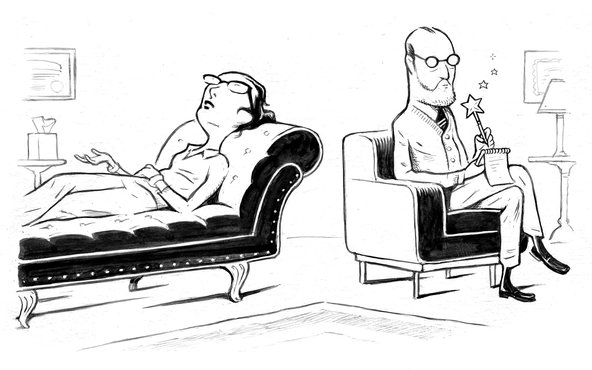
What do you think of when you picture therapy? A client on a couch and a psychologist exploring their past and analyzing their dreams? Well that's what the infamous psycholgist Sigmund Freud is known for. Let's explore and learn about some other famous psychologists who approached psychotherapy in a different manner. You will discover the similarities and differences between three psychologist and their theories. You will also have the chance to role play as a psychologist or client after choosing your favorite method.
Task
By the end of this WebQuest, you will be to demonstrate your understanding of three psychotherapists, Carl Rogers, Fritz Perls, and Albert Ellis, and their theories.
Process
OUTLINE OF TASKS
- First you will research background information on the three psychotherapists of focus: Carl Rogers, Fritz Perls, and Albert Ellis. With this information, you will create three biographical paragraphs by answering the provided questions below.
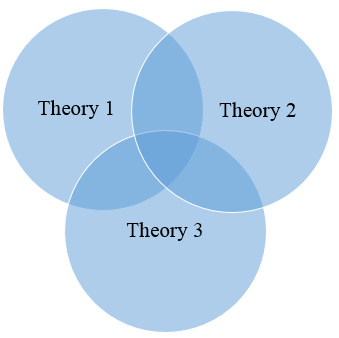
- Next you will research the developmental therories of each psychologist, and take notes on these theories. Then, breaking up into groups of 4 you will use your notes to fill out a Venn diagram with your classmates about the similarities and differences between the 3 theories.
- Finally, you will be given a case study and partner up with one person from the class to role play this scenario as either the psychologist from one of 3 theorist's perspective or as the client. You and your partner will present this role play to the class.
BIOGRAPHICAL INFORMATION
Use the following links to find answers to the questions below for EACH psychologist. Answer the questions in paragraph form using Microsoft Word. Make sure that you do NOT plagarize. If you do choose to borrow direct quotes from the information provided, please cite your sources. Print and hand in your 3 paragraphs once you're done.
- What is the psychologist's name?
- When and where were they born? When did they die?
- During what year did they create their theory on therapy?
- What did they coin their therapy as?
- What events shaped or changed their life? (You may list a short timeline detailing some of these events).
- List one interesting fact you found about them.
Carl Rogers:
http://www.muskingum.edu/~psych/psycweb/history/rogers.htm
http://www.simplypsychology.org/carl-rogers.html
http://psychology.about.com/od/profilesofmajorthinkers/p/bio_rogers.htm
Fritz Perls:
http://www.gestalt.org/fritz.htm
http://www.goodtherapy.org/famous-psychologists/fritz-perls.html
Albert Ellis:
http://www.rebtnetwork.org/whois.html
http://www.goodtherapy.org/famous-psychologists/albert-ellis.html#
PSYCHOTHERAPY THEORIES
Use the links above and the links below to take notes about the psychologist's theories. In your notes list the premise behind the theory, the techniques used on clients, and the strengths/limitations of the theory. Once everyone is done, we will break into groups of 4 and fill out a Venn diagram comparing and contrasting the 3 theories. Turn in your group's Venn diagram once complete. Below is an example of what the Venn diagram should look like.
Venn Diagram Example:
Additional links with information on theories:
http://jgarrett43mu-mucoun607.blogspot.com/2007/11/chapter-4-classic-gestalt-techniques.html
http://psychology.about.com/od/typesofpsychotherapy/a/rational-emotive-behavior-therapy.htm
http://counsellingresource.com/lib/therapy/types/rational-emotive/
View the following case study about a woman named Sonia below. Partner with a classmate and decide between the two who will be the psychotherapist and who will be the client (Sonia). Next, pick a specific psychotherapist (either Rogers, Perls, or Ellis) and role play how you might treat Sonia from that theorist's ideas and perspective using their theory. The role play should last no longer than 5 minutes. You will be presenting your role play to the class once complete.
Case Study:
Sonia is a 28 year-old married female. She has a very demanding, high stress job as a second year medical resident in a large hospital. Sonia has always been a high achiever. She graduated with top honors in both college and medical school. She has very high standards for herself and can be very self-critical when she fails to meet them. Lately, she has struggled with significant feelings of worthlessness and shame due to her inability to perform as well as she always has in the past.
For the past few weeks Sonia has felt unusually fatigued and found it increasingly difficult to concentrate at work. Her coworkers have noticed that she is often irritable and withdrawn, which is quite different from her typically upbeat and friendly disposition. She has called in sick on several occasions, which is completely unlike her. On those days she stays in bed all day, watching TV or sleeping.
At home, Sonia’s husband has noticed changes as well. She’s shown little interest in hanging out and has had difficulties falling asleep at night. Her insomnia has been keeping him awake as she tosses and turns for an hour or two after they go to bed. He’s overheard her having frequent tearful phone conversations with her closest friend, which have him worried. When he tries to get her to open up about what’s bothering her, she pushes him away with an abrupt “everything’s fine”.
Although she hasn’t ever considered suicide, Sonia has found herself increasingly dissatisfied with her life. She’s been having frequent thoughts of wishing she was dead. She gets frustrated with herself because she feels like she has every reason to be happy, yet can’t seem to shake the sense of doom and gloom that has been clouding each day as of late.
Evaluation
|
|
Beginning 1 |
Developing 2 |
Accomplished 3 |
Exemplary 4 |
Score |
|
Question Answers for Biography Paragraphs |
Not all questions were answered, and the answers that were given were not detailed. |
Not all questions were answered, but the answers that were given were answered thoroughly. |
All questions were answered, but not in a detailed manner. |
All questions were answered in a thorough manner. |
|
|
Note-Taking and Venn Diagram |
Notes and Venn diagram are incomplete. Those that were completed were not done within specified guidelines. |
Notes and Venn diagram are incomplete. Those that were completed were however done within specified guidelines. |
All note-taking tasks were completed, including the Venn diagram, but not according to the specified guidelines. |
All note-taking tasks and the Venn diagram were completed according to the specified guidelines. |
|
|
Role Play Presentation |
The role play went past the time limit and did not represent the theory and its techniques appropriately. |
The role play was within the time limit, but did not represent the theory its techniques appropriately. |
The role play was creative and appropriately included the theory and its techniques, but exceed the time limit. |
The role play was creative and appropriately included the theory and its techniques within the time frame. |
|
Conclusion
Congrats! You have succesfully completed this WebQuest. You now know about the differences between the following three psychotherapists and their theories: Carl Rogers, Fritz Perls, and Albert Ellis.
If you're interested, the following 3 YouTube links contain videos of all three psyschotherapists counseling a client named Gloria filmed in 1965. This rare video is the one time in history this was ever possible to do because confidentiality laws would never allow for this today.
Gloria Videos
Carl Rogers: https://www.youtube.com/watch?v=24d-FEptYj8
Fritz Perls: https://www.youtube.com/watch?v=8y5tuJ3Sojc
Albert Ellis: https://www.youtube.com/watch?v=odnoF8V3g6g

Here are some Short Quizzes if you're interested in testing your knowledge!
Carl Rogers: http://www.onlinequizcreator.com/en/carl-rogers-quiz/exam-6228
Fritz Perls: http://www.onlinequizcreator.com/en/fritz-perls-quiz/quiz-31472
Albert Ellis: http://www.onlinequizcreator.com/en/albert-ellis-quiz/exam-6230
Credits

Teacher Page
This WebQuest is designed in conjuction with the AP Psychology curriculum for 11th and 12th grade students.
To implement this WebQuest, all students must have access to a computer with a reliable internet connection. It is designed to take up an hour and a half lesson, however, additional time may be needed for discussion and role plays.
Teachers should familiarize themselves with the links before implementing this resource into the classroom.
The WebQuest can supplement teaching and prepare students for the AP Psychology exam. Content falls under the section of "History and Approaches" which makes up 2-4% of the multiple choice questions on the exam according to CollegeBoard.
For additional exam information and resources, visit: http://apcentral.collegeboard.com/apc/public/courses/teachers_corner/2265.html?excmpid=MTG243-PR-13-cd -- Here, you will find teaching tips, free practice exams, and guides on conducting the class.
Alyssa Gandhi, North Carolina State University