
Introduction
Pythagoras theorem
Ever wondered where a formula or mathematical rule came from? Who created it and why?
Pythagoras theorem is an example of a mathematical formula. It is used to find the length of an unknown side of a right-angled triangle.
This theorem has been used for centuries and greatly helps mathematicians in today's society but who designed it and where did it orginate from?

Task
Task
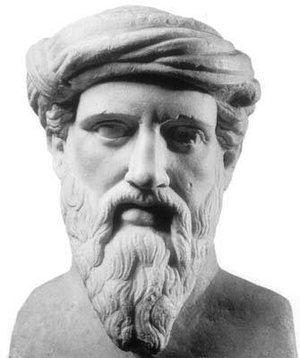
Before you can understand how to solve questions using Pythagoras theorem, you must first research on the origin of Pythagoras theorem. Consider questions such as;
- Where did it come from?
- Who developed it and why?
- What does it explain?
Process

Research the Origin of Pythagoras Theorem
- Use a variety of websites to enhance your reliability and list the URL's under your information.
- You can either use a word doc or power point presentation to display your data.
Once you have researched the origin, surf the web for sites that use appropriate activities or games that support learning on Pythagoras theorem.
Print out 10 questions (randomly chosen from different sites), solve them and then scan them into the computer to paste on your doc/power point presentation.
Comment on which activity/games website was most useful to you and why? Was it the images or how the question was written? Where there demonstrations? If so, were they helpful?
Here are some links to get you started:
http://www.geom.uiuc.edu/~demo5337/Group3/hist.html
http://mathematica.ludibunda.ch/pythagoras6.html
http://www.math-play.com/Pythagorean-Theorem-Game.html
http://www.math-play.com/Pythagorean-Theorem-Jeopardy/Pythagorean-Theorem-Jeopardy.html
http://www.brainingcamp.com/content/pythagorean-theorem/problems.php
Evaluation
| Evaluation Rubric | ||||||||||||||||||||||||||||||||||
|
|
||||||||||||||||||||||||||||||||||
|
Conclusion
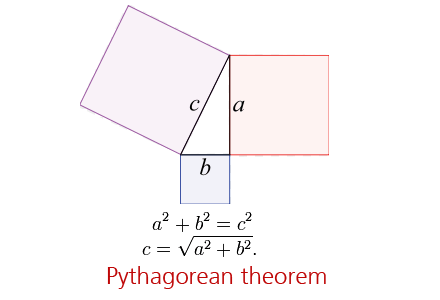
Once you have finished your research activity, you have become a knowledgeable researcher who understands, can use and explain Pythagoras theorem.
Below are some helpful videos that explain Pythagoras theorem further:
https://www.youtube.com/watch?v=ku4rEwRxZOc
Credits
Thanks to my tutor Jenna, I understand what a webquest is and how to create one. She also advised us on what should be included in the webquest for it to be successful. This involves incorporating the use of ICT both effectively and appropriately.
I also found a webquest, which was helpful in developing parts of my webquest. It is found at:
http://zunal.com/webquest.php?w=229222
I also used the following sites for the standards relating to Pythagoras theorem
http://syllabus.bos.nsw.edu.au/mathematics/mathematics-k10/content/757/
Teacher Page
Standards:
The Australian Curriuclum ACARA
Measurement and Geometry: Using units of measurement
1. Establish the formulas for areas of rectangles, triangles and parallelograms and use these in problem solving (ACMMG159).
NSW Syllabus for the Australian Curriculum
Outcomes
A student:
- communicates and connects mathematical ideas using appropriate terminology, diagrams and symbols (MA4-1WM).
- applies appropriate mathematical techniques to solve problems (MA4-2WM).
- applies Pythagoras' theorem to calculate side lengths in right-angled triangles and solves related problems (MA4-16MG).
Student will also learn how to:
1. research online using a variety of sources
2. list the URL's to support where the information was retrieved from
3. format/structure a document
4. write a reflection