
Introduction
How Do You Define 21st-Century Learning?
The term "21st-century skills" is generally used to refer to certain core competencies such as collaboration, digital literacy, critical thinking, and problem-solving that advocates believe schools need to teach to help students thrive in today's world. In a broader sense, however, the idea of what learning in the 21st century should look like is open to interpretation—and controversy.
To get a sense of how views on the subject align—and differ—we recently asked a range of education experts to define 21st-century learning from their own perspectives.
The number of students with special needs is on the rise across the United States, making it increasingly difficult for educators to teach effectively to their entire student body. Did you know that there are approximately 7 million students in the United States with disabilities? Did you know that only 62.7% of students with special needs in the US graduate high school? With the increase of students with special needs in the US and the current trend in education to increase inclusion in the classroom, educators are experiencing difficulties dividing their time and attention equally across their students.
Advances in technology are making it possible for teachers to best assist students with special needs and or limited language skills, to learn alongside the average student. Through the use of computer programs and games and other devices, students with special needs can participate in the same activity as their peers or a slightly altered program based on their specific needs and skill set.
What programs are available and how much do they cost?
Although not every teacher has equal access to materials including expensive technology resources, there are some options that are free or are usually provided by the school district to all their teachers. From the cost of free to thousands of dollars, there are educational programs and devices that enhance learning in the classroom for all learners, and enable special education students to express themselves more completely and to learn more effectively.
Here are just a few options:
- Augmentative and Alternative Communication Devices (AAC)- AAC devices enable students who have limited verbal skills to have a voice. Students can select a picture on a screen that speaks for themselves. These programs also allow deaf students to reply to questions through the use of these devices. The cost of AAC devices can range from as little as $180 to as much as $2,100.
- MangoMon– MangoMon is free for many educators, and provides interactive reading and mathematics lessons. This program also makes it possible to specialize education plans for each student using the program, and it offers direct parent access for viewing student progress.
- Photo Vocabulary– Typically funded through the school, Photo Vocabulary enables students to learn through vocabulary flash cards and audio pronunciation. This program enhances learning opportunity for students with multiple types of disabilities.
- Sounding Board- Sounding Board is an app on the iPad which changes a student’s iPad into a storyboard This program enables students with a variety of writing disabilities such as Dyslexia, and communication disorders, such as Autism Spectrum Disorders, to develop their message through the use of pictures. This program offers an endless supply of pictures and symbols and helps largely non-verbal students express themselves. *Note: Some schools are now offering iPads to all their students as a way to enhance their curriculum. One iPad per student can cost $500-$950.
- VoiceThread – The VoiceThread program functions as a substitute for the traditional way of writing. This free software program records students’ voices with the intention of allowing students to narrate their project or task.
- TechMatrix – TechMatrix is a program sponsored by the National Center for Technology Innovation, which describes information and details links and resources for a wide variety of subjects for students with special needs.
Limited budget? What are other possibilities?
If your school’s budget is limited, try considering using the technology you may already possess in your school. To assist some students, it may be easier than you think. When working with a student with a visual or a fine motor disability, you can use a regular desktop computer that your school already has, and purchase only a large-font keyboard, and or a color-coded keyboard. Also, if a student is experiencing difficulty in pressing computer buttons due to their size, switches are available to serve in place of the “enter key,” or of a computer mouse.
Why Use Edtech?
When it comes to teaching in the classroom, technology can serve as an equalizer. Edtech in the classroom is making it increasingly possible to offer equitable learning opportunities to students with special needs. Even if your school may not have sufficient funding to purchase iPads for every student, there are computer games and programs that are available for free on the internet. As technology continues to march humanity through the 21st-century smartphones, iPads, mobile devices, and computer programs that identify speech patterns are just a few of the widely accessible tools that teachers now have access to. Other equipment such as screen reading tools, specialized keyboards, Braille displays, and text-to-speech solutions are additional ways that we can assist all students with all levels of ability to learn and improve their life opportunities.
21st Century skills are 12 abilities that today’s students need to succeed in their careers during the Information Age.
21st Century skills are:
- Critical thinking
- Creativity
- Collaboration
- Communication
- Information literacy
- Media literacy
- Technology literacy
- Flexibility
- Leadership
- Initiative
- Productivity
- Social skills
These skills are intended to help students keep up with the lightning-pace of today’s modern markets. Each skill is unique in how it helps students, but they all have one quality in common.
They’re essential in the age of the Internet.
On this page, we’ll take a look at what’s included in 21st Century skills, how they help students, and why they’re so important.
Video: What Are 21st Century Skills?
Join Chris Zook, content marketing manager at Applied Educational Systems, as he delves into the details of 21st Century skills.
Infographic List: 21st Century Skills
Want a quick graphic reference about 21st Century skills?
Keep this infographic on-hand for any student of any age — even as young as middle school!
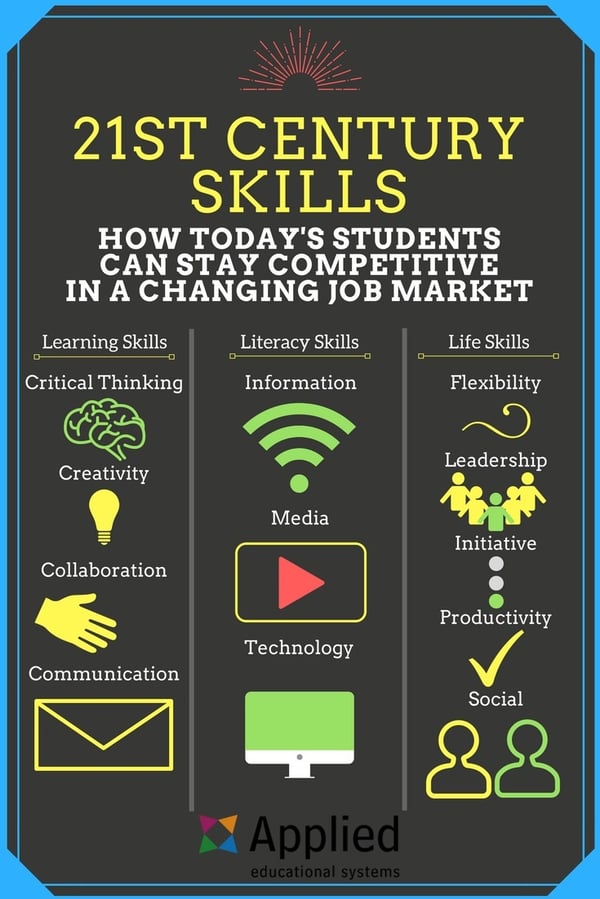
Let’s start with an overview of the skill categories.
The Three 21st Century Skill Categories

Each 21st Century skill is broken into one of three categories:
Each of these categories pertains to a specific part of the digital curriculum experience.
Learning skills (the four C’s) teaches students about the mental processes required to adapt and improve upon a modern work environment.
Literacy skills (IMT) focuses on how students can discern facts, publishing outlets, and the technology behind them. There’s a strong focus on determining trustworthy sources and factual information to separate it from the misinformation that floods the Internet.
Life skills (FLIPS) take a look at intangible elements of a student’s everyday life. These intangibles focus on both personal and professional qualities.
Altogether, these categories cover all 12 21st Century skills that contribute to a student’s future career.
Let’s take a closer look at each category.
Category 1. Learning Skills (The Four C’s)

The four C’s are by far the most popular 21st Century skills. These skills are also called learning skills.
More educators know about these skills because they’re universal needs for any career. They also vary in terms of importance, depending on an individual’s career aspirations.
- Critical thinking: Finding solutions to problems
- Creativity: Thinking outside the box
- Collaboration: Working with others
- Communication: Talking to others
Arguably, critical thinking is the most important quality for someone to have in health sciences.
In business settings, critical thinking is essential to improvement. It’s the mechanism that weeds out problems and replaces them with fruitful endeavors.
It’s what helps students figure stuff out for themselves when they don’t have a teacher at their disposal.
Creativity is equally important as a means of adaptation. This skill empowers students to see concepts in a different light, which leads to innovation.
In any field, innovation is key to the adaptability and overall success of a company.
Learning creativity as a skill requires someone to understand that “the way things have always been done” may have been best 10 years ago — but someday, that has to change.
Collaboration means getting students to work together, achieve compromises, and get the best possible results from solving a problem.
Collaboration may be the most difficult concept in the four C’s. But once it’s mastered, it can bring companies back from the brink of bankruptcy.
The key element of collaboration is willingness. All participants have to be willing to sacrifice parts of their own ideas and adopt others to get results for the company.
That means understanding the idea of a “greater good,” which in this case tends to be company-wide success.
Finally, communication is the glue that brings all of these educational qualities together.
Communication is a requirement for any company to maintain profitability. It’s crucial for students to learn how to effectively convey ideas among different personality types.
That has the potential to eliminate confusion in a workplace, which makes your students valuable parts of their teams, departments, and companies.
Effective communication is also one of the most underrated soft skills in the United States. For many, it’s viewed as a “given,” and some companies may even take good communication for granted.
But when employees communicate poorly, whole projects fall apart. No one can clearly see the objectives they want to achieve. No one can take responsibility because nobody’s claimed it.
Without understanding proper communication, students in the 21st Century will lack a pivotal skill to progress their careers.
But the four C’s are only the beginning. 21st Century skills also require students to understand the information that’s around them.
Category 2. Literacy Skills (IMT)

Literacy skills are the next category of 21st Century skills.
They’re sometimes called IMT skills, and they’re each concerned with a different element in digital comprehension.
- Information literacy: Understanding facts, figures, statistics, and data
- Media literacy: Understanding the methods and outlets in which information is published
- Technology literacy: Understanding the machines that make the Information Age possible
Information literacy is the foundational skill. It helps students understand facts, especially data points, that they’ll encounter online.
More importantly, it teaches them how to separate fact from fiction.
In an age of chronic misinformation, finding truth online has become a job all on its own. It’s crucial that students can identify honesty on their own.
Otherwise, they can fall prey to myths, misconceptions, and outright lies.
Media literacy is the practice of identifying publishing methods, outlets, and sources while distinguishing between the ones that are credible and the ones that aren’t.
Just like the previous skill, media literacy is helpful for finding truth in a world that’s saturated with information.
This is how students find trustworthy sources of information in their lives. Without it, anything that looks credible becomes credible.
But with it, they can learn which media outlets or formats to ignore. They also learn which ones to embrace, which is equally important.
Last, technology literacy goes another step further to teach students about the machines involved in the Information Age.
As computers, cloud programming, and mobile devices become more important to the world, the world needs more people to understand those concepts.
Technology literacy gives students the basic information they need to understand what gadgets perform what tasks and why.
This understanding removes the intimidating feeling that technology tends to have. After all, if you don’t understand how technology works, it might as well be magic.
But technology literacy unmasks the high-powered tools that run today’s world.
As a result, students can adapt to the world more effectively. They can play an important role in its evolution.
They might even guide its future.
But to truly round out a student’s 21st Century skills, they need to learn from a third category.
Category 3. Life Skills (FLIPS)

Life skills is the final category. Also called FLIPS, these skills all pertain to someone’s personal life, but they also bleed into professional settings.
- Flexibility: Deviating from plans as needed
- Leadership: Motivating a team to accomplish a goal
- Initiative: Starting projects, strategies, and plans on one’s own
- Productivity: Maintaining efficiency in an age of distractions
- Social skills: Meeting and networking with others for mutual benefit
Flexibility is the expression of someone’s ability to adapt to changing circumstances.
This is one of the most challenging qualities to learn for students because it’s based on two uncomfortable ideas:
- Your way isn’t always the best way
- You have to know and admit when you’re wrong
That’s a struggle for a lot of students, especially in an age when you can know any bit of information at the drop of a hat.
Flexibility requires them to show humility and accept that they’ll always have a lot to learn — even when they’re experienced.
Still, flexibility is crucial to a student’s long-term success in a career. Knowing when to change, how to change, and how to react to change is a skill that’ll pay dividends for someone’s entire life.
It also plays a big role in the next skill in this category.
Leadership is someone’s penchant for setting goals, walking a team through the steps required, and achieving those goals collaboratively.
Whether someone’s a seasoned entrepreneur or a fresh hire just starting their careers, leadership applies to career.
Entry-level workers need leadership skills for several reasons. The most important is that it helps them understand the decisions that managers and business leaders make.
Then, those entry-level employees can apply their leadership skills when they’re promoted to middle management (or the equivalent). This is where 21st Century skill learners can apply the previous skills they’ve learned.
It’s also where they get the real-world experience they need to lead entire companies.
As they lead individual departments, they can learn the ins and outs of their specific careers. That gives ambitious students the expertise they need to grow professionally and lead whole corporations.
Leadership alone isn’t enough to get ahead though.
True success also requires initiative, requiring students to be self-starters.
Initiative only comes naturally to a handful of people. As a result, students need to learn it to fully succeed.
This is one of the hardest skills to learn and practice. Initiative often means working on projects outside of regular working hours.
The rewards for students with extreme initiative vary from person to person. Sometimes they’re good grades. Other times they’re new business ventures.
Sometimes, it’s spending an extra 30 minutes at their jobs wrapping something up before the weekend.
Regardless, initiative is an attribute that earns rewards. It’s especially indicative of someone’s character in terms of work ethic and professional progress.
That goes double when initiative is practiced with qualities like flexibility and leadership.
Along with initiative, 21st Century skills require students to learn about productivity. That’s a student’s ability to complete work in an appropriate amount of time.

In business terms, it’s called “efficiency.”
The common goal of any professional — from entry-level employee to CEO — is to get more done in less time.
By understanding productivity strategies at every level, students discover the ways in which they work best while gaining an appreciation for how others work as well.
That equips them with the practical means to carry out the ideas they determine through flexibility, leadership, and initiative.
Still, there’s one last skill that ties all other 21st Century skills together.
Social skills are crucial to the ongoing success of a professional. Business is frequently done through the connections one person makes with others around them.
This concept of networking is more active in some industries than others, but proper social skills are excellent tools for forging long-lasting relationships.
While these may have been implied in past generations, the rise of social media and instant communications have changed the nature of human interaction.
As a result, today’s students possess a wide range of social skills. Some are more socially adept than others. Some are far behind their peers. And some lucky few may be far ahead, as socializing comes naturally to them.
But most students need a crash course in social skills at least. Etiquette, manners, politeness, and small talk still play major roles in today’s world.
That means some students need to learn them in an educational setting instead of a social setting.
For them, it’s another skill to add to their lives.
Now that we’ve established what 21st Century skills are, let’s answer the next big question.
Do employers actually want people with 21st Century skills?
What’s the Demand for 21st Century Skills?

While 21st Century skills have always been important, they’ve become essential in a worldwide market that moves faster by the day.
These skills all double back to one key focus.
Someone’s ability to enact and / or adapt to change.
This is because any industry is capable of changing at a moment’s notice. Industries are now regularly disrupted with new ideas and methodologies.
Those industries that haven’t been disrupted aren’t immune though. They just haven’t been disrupted yet.
With that in mind, the world has entered an era where nothing is guaranteed.
As a result, students need to learn to guide the change that’ll inundate their lives. At the very least, they need to learn how to react to it.
Otherwise, they’ll be left behind.
This is especially true as customer demand accelerates in all industries along with expectations for newer features, higher-level capabilities, and lower prices.
In today’s marketplace, falling behind means becoming obsolete.
That’s a familiar concept to all of today’s students as tomorrow’s advancements make today’s miracles quaint or unimpressive.
Today, the only consistency from year to year is change.
With 21st Century skills, your students will have the adaptive qualities they need to keep up with a business environment that’s constantly evolving.
How Does Century Skills Help Students with 21st century?
AES uses a tried-and-true approach to help you teach students about 21st Century skills.
We’ve hand-crafted specialized curriculum modules that fit into any teacher’s career prep course.
For example, we have pre-made modules about:

These five modules only scratch the surface.
In each one of them, your students can learn valuable 21st Century skills that they’ll use in their careers for the rest of their lives.
With you at the helm, AES digital curriculum supplements your expertise by giving students the ability to work at their own paces.
Plus, it saves you time since you can integrate pre-made modules into your own lesson plans.
This also gives you a blended classroom, which is proven to save time, promote tech literacy, and cut costs all at once.
It even gives your students the chance to go back and review on their own time. That means you can concentrate on helping the students in your class who are furthest behind while others move forward on their own.
That’s a lot of value from a single learning management system.
Still, it’s important to note that AES curriculum isn’t intended to replace your teaching expertise — it works best as a supplement.
After all, you’re the one with the experience, and that’s something your students can’t learn from software alone.
But with AES digital curriculum, you get to save time, money, and stress all at once.
Teaching is a tough job — AES curriculum makes it a whole lot easier, even if you're a new teacher using it for the first time.
This goes double for 21st Century skills.
When you need to teach your students the essentials they’ll need in the workplace, AES has your back.
more explanation in this content:(Watch this videos)
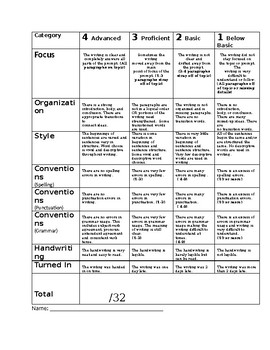
Task
Essay:
Direction:
Answer the following question with atleast 5-10 sentences
1.What is the importrance of 21str century skills in education?
2.Is 21st century skill still helpful to the learners?
3.Why do we need 21st century skill?
4.How does the 21st century skills helps the learners?
5.Why do we think 21st century skills interesting?
6.Does 21st century skills help develop learners ?
7.does 21st century skill still useful in todays generation?
8.Is 21st century learning applicable in remote areas with limited access to technology?
9.why is it important to have this 21st century skill?
10.What are the skill that the learners can benefit in the 21st century skill?
Evaluation
Conclusion
LEARNING FOR LIFE—BUILDING A BETTER WORLD
Since we live in an age of innovation, a practical education must prepare a person for work that does not yet exist and cannot yet be clearly defined. —Peter Drucker
The real source of wealth and capital in this new era is not material things. It is the human mind, the human spirit, the human imagination, and our faith in the future. —Steve Forbes
4 Essential Rules Of 21st Century Learning
contributed by Jennifer Rita Nichols
The term “21st century” has become an integral part of educational thinking and planning for the future. Educators and administrators are actively searching for ways to prepare students for the future, and the educational system has been evolving faster than ever before.
Various studies have shown us that rote memorization is not an effective learning strategy and that teacher-centered classrooms (versus student-centered classrooms) may not be the most efficiently structured ones for student engagement.
However, despite learning about the skills that students will need to develop to become successful in the 21st century, as well as what beliefs about education may be worth hanging onto or throwing away, schools and teachers are left trying to figure out what their role needs to be in the education of their 21st century students.
Once upon a time, the role of the educator was to prepare students for the specific tasks they would be required to complete (be it a trade, craft, or profession). Communities were also much more homogenous, and so specific values and cultures needed to be transmitted and practiced to ensure the survival of those beliefs.
Nowadays, we don’t live in the same world. Society is a mix of many different beliefs and cultures. Globalization has opened up the world and allowed people to connect in new and exciting ways. We blend traditions and create unique belief systems that are not taught in any classroom, but are developed through our life experiences and passions. We transmit our values and cultures without the expectation of them being adopted by our audience – just accepted by them.
So then, what is the role of education in the 21st century?
The Assimilation vs Accommodation Of Knowledge
The Definition Of Intrinsic Motivation
As always, at its core, the role of education is to prepare students to become active, successful, and contributing members of society. The essence of education’s role has not changed.
However, there has been an important change that must be considered.
Society has changed. We cannot adequately prepare students for the society that exists today or will exist tomorrow, if we continue to prepare them for the society that existed yesterday. In order to prepare students to play their role in the 21st-century society we are a part of, a few things need to be considered when deciding how education will look in our schools and classrooms.

1. Instruction should be student-centered
The days of lecturing teachers has passed – though not entirely. While student-centered learning is strongly encouraged in the 21st century, this does not mean that the teacher can never give a lecture again. Instead, it means that the main source of knowledge in the classroom should not be the teacher. Education is no longer about listening to the teacher talk and absorbing the information.
In order to contribute to society, students will need to be able to acquire new information as problems arise. Then, they will need to connect the new information with the knowledge they already have and apply it to solving the problem at hand. They will not be able to call upon a teacher for answers, so will need to have ‘learned how to learn’ on their own.
In this classroom model, the teacher would act as a facilitator for the students. Instead of passively receiving information, the students would gather information on their own, under the guidance of their teacher. Different learning styles are encouraged, and students have an enhanced sense of motivation and responsibility. They engage in many different types of hands-on activities, as well as demonstrate learning in many different ways. Learning is about discovery, not the memorization of facts.
2. Education should be collaborative
Students must learn how to collaborate with others. Society today has people collaborating across the globe. How can students be expected to work with people from other cultures, with different values from their own, if they are not able to work with the people they see each day in their classroom?
Students should be encouraged to work together to discover information, piece it together, and construct meaning. Collaboration should also be dynamic. Students should learn how to recognize the different strengths and talents each person can bring to a project, and change roles depending on those attributes.
Schools should also be collaborating with other educational institutions around the world to share information and learn about different practices or methods that have been developed. They should be willing to alter their instructional methods in light of new advancements.
3. Learning should have context
Student-centered does not mean that the teacher gives up all control of the classroom. While students are encouraged to learn in different ways, the teacher still provides guidance as to the skills that need to be acquired. The teacher can make a point of helping students to understand how the skills they are building can be applied in their lives. Students will be much more motivated to learn something that they can see the value in.
Since we are no longer preparing students for specific tasks and roles, we need to take a more general approach and teach them the skills that are useful in any situation. Lessons have little purpose if they do not have any impact in a student’s life outside of the school.
4. Schools should be integrated with society
In order to prepare students to become responsible citizens, we need to model what a responsible citizen is.
Schools will often work at accomplishing this by creating events for the school community, by encouraging students to join committees or take part in school projects, and by occasionally helping the community around them with activities such as food drives or neighborhood clean-ups.
With the powers of technology and the internet, students of today can do even more. Our community is no longer just the area of space located around the school, but reaches out and envelopes the world.
Education needs to help students take part in this global community and find ways of impacting more than just their neighborhood. This doesn’t mean that they do not need to learn the value of helping others around them and protecting their immediate environment, but that they should also be learning about how they can help and protect a world further away from them, but also closer all the time.