
Introduction
This webquest is designed to help you explore African geography. You will create a virtual scrapbook to showcase your work.
Introduction:
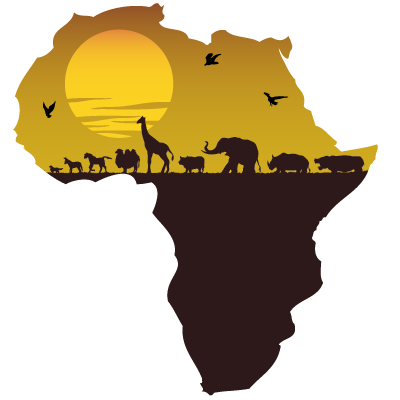
What other continent can you find the treasures of the Nile, fight the blazing heat of the Sahara Desert, and explore the tropical rainforests? Africa is a climate of diversity and beauty, home to a multitude of unique wildlife and resources. Africa is a continent which necessitates exploration of its varied regions to unravel the mysteries of its geography.
Task
Task
You and the rest of your classmates have just returned from an exciting trip to Africa. Because of the diverse regions of this continent, your class agreed to take photographs and record information from only one of the regions so you could share all your information when you return. Your job is to create a virtual scrapbook using Google Slides to share with your classmates everything you learned on your trip.
Process
Process
- You will be assigned a partner and together you will receive a map to complete using the map of Africa and chapter 5 section 1 of your textbook. Each partner will identify the following geographic features. When you are finished, you will raise your hand to have Mr. D check the completion of the map.
- All the Countries
- Equator
- Atlantic Ocean
- Mediterannean Sea
- Red Sea
- Indian Ocean
- Horn of Africa
- Niger River
- Senegal River
- Congo River
- Kalahari Desert
- Sahara Desert
- Lake Victoria
- Gulf of Aden
- Mt. Kilamanjaro
- Strait of Gibraltar
- Savannah
- Sahel
- Rainforest Regions
- Upon completion, you and your partner will be assigned one African Region by me.
- Your partner and you will click on your region and read the article about your region http://www.pbs.org/wnet/africa/explore/index_flash.html
- Although there is only one link provided, you will be responsible for exploring all links (people, eco, topography etc.) under this link to complete this assignment
- Each student in the group will take notes on their African Fact Sheet
- You will need to type in the name of your region in The Africa Image Library to search for pictures to add to your scrapbook.
- You and your partner will open the Google Slides Template on your Haiku page or Google Drive to compile your virtual scrapbook, using the template as provided.
- You and your partner will use the template and your fact sheet to complete the virtual scrapbook.
- Both of you will then present your region to the class, and the class will take notes on the presentations.
Evaluation
Evaluation
|
|
Beginning 10 |
Developing 20 |
Accomplished 30 |
Exemplary 40 |
Score |
|---|---|---|---|---|---|
|
Using the Map as provided, the student correctly identified the geographical features listed. |
Less than 80% of geographical features were correctly identified | 80% of geogrpahical features correctly identified | 90% of geographical features correctly identified | All geographical features correctly identified | |
|
Using the Africa imagery website, the student located relevant pictures. |
The student found less than five pictures and only a few were relevant to the category and region. | The student found 5 pictures and most were relevant to category and region. | The student found 7 pictures and all were relevant to category and region. | The student found 9 pictures and all were relevant to category and region. | |
|
Using the PBS website, the student identified facts that helped describe the region. |
Less than 6 facts were identified with little relevance to the region | 6-7 facts were identified, and some were relevant to the region | 8-9 relevant facts were identified | 10 or more relevant facts were identified |
Conclusion
Conclusion
After viewing everyone's virtual scrapbook, discuss the following with your partner:
- What are some geographic features that make Africa a unique environment?
- What region would you most like to visit and why?
- Name three new things you learned from your classmates presentations.
Africa is a continent that has very diverse climates and geographical features. Because of the differences between regions, humans and animals have adapted to the environment in which they live.