
Introduction
Welcome Zoologists!! We are pleased that you have decided to join us in designing the new "Class Zoo". We know that by sharing your knowledge of your chosen animal with the rest of the group, you will be able to convince us to include your animal in our new development. Your fact sheet and model will show us important facts about your animal. YOU have been chosen based on your hard work and effort in previous presentations.
We are so pleased to have you on board!!
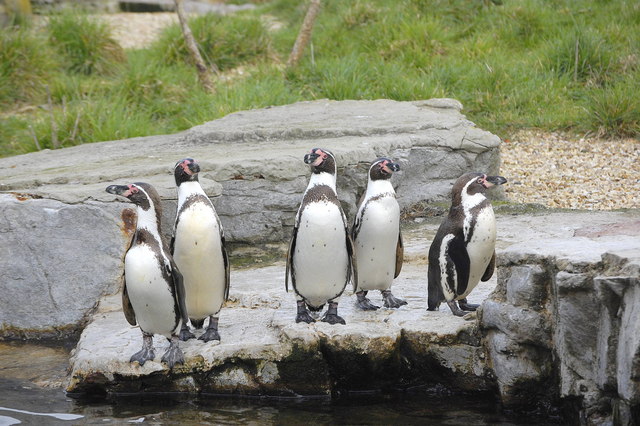
<image: Humboldt Penguins. www.geograph.org.uk/photo/2375239>

<image: Bengal Tigers. http://www.fotopedia.com/entries/NcY_cgZEMOo >
Task
The developers would like to thank you for taking part in this process. You will complete the following tasks:
1. As a group, decide which ONE of the following animals you will become an expert in:
- Zebra
- Giraffe
- Monkey
- Turtle
- Seal
Once you have decided, you must gain approval from the lead developer (teacher) of your choice. Only one group can study each animal so first in best dressed.
2. Watch the video about animal classifications. Take note of your animal's classification.
3. Research your animal. Write down any important information, including habitat, dietary needs, and country of origin, on the graphic organiser. Pictures and sketches can also be included.
4. Design an information sheet for your animal and create 3D model that portrays the uniques features of your animal. Create a word cloud to include with your fact sheet. These will then be presented to the class zoo development committee.
5. Play against your classmates in the game of "scatter". Discuss reflection questions as a group.
Process
Process 1
Now it's time to learn about classifying animals. Watch the video and see how animals are classified based on their particular characteristics. Be sure to make note of which group your animal belongs to.
video:http://www.brainpopjr.com/science/animals/classifyinganimals/
.jpg)
<image: Animal Portraits. http://commons.wikimedia.org/wiki/File:Animal_Portraits_(5453243960).jp…;
.jpg>)
Process 2
You are well on your way to becoming experts!! It is time to research and discover some amazing facts about your animal. Remember to note these down in your graphic organiser and be sure to include things such as habitat, dietary needs and so on. Try to make your facts as interesting as possible in order to convince the developers to include your animal in the class zoo. Here is the link for your organiser:
http://tonyastreatsforteachers.blogspot.com.au/2013/11/animals-and-their-habitatsfreebie.html
Use the following links for your research:
- http://www.bronxzoo.com/animals-and-exhibits/animals.aspx
- http://www.kbears.com/animals/index.html
- http://kids.nationalgeographic.com.au/kids/animals/creaturefeature/
- http://www.softschools.com/facts/animals/
- http://www.seals-world.com/facts-about-seals/
- http://www.sciencekids.co.nz/sciencefacts/animals/zebra.html
- http://www.animalfactguide.com/animal-facts/giraffe/
Process 3:
Now that you have finished researching your animal, it's time to share and discuss your information as a group. Decide which information is important to include on your fact sheet and how you are going to go about creating your fact sheet. Will it be done on the computer, as a poster etc. Discuss the unique features of your animal that should be portrayed on your 3D model and how you wih to create this-pipecleaners, modelling clay etc. Divide tasks amongst yourselves and get started!
Remember, you will present these to the developers upon completion.
Process 4:
Create a word cloud using Wordle. Each member can contribute as many words related to their animal as they want. Words can be entered more than once and colours etc can be changed to create an attractive cloud. Be sure to print your cloud and add to your fact sheet.
Evaluation
This is how your work will be evaluated. Each student will be assessed individaully.
|
|
1 Basic |
2 Developing |
3 Proficient |
4 Excellent |
|
Group Participation |
Student does not contribute to group discussions |
Students contributes in some group discussions |
Student contributes effectively to group discussions |
Student contributes in all group discussions and encourages others to do so |
|
Understanding |
No knowledge of animal is demonstrated |
Some understanding of animal is demonstrated |
A good understanding of chosen animal is demonstrated |
A thorough understanding on animal is demonstrated |
|
Fact Sheet |
No contribution made to either research or creation of fact sheet. No word cloud created |
Some notes/assistance towards research or creation of fact sheet. No word cloud created |
Many research notes taken and/or effort into creation of fact sheet. Word cloud is attempted |
All important notes are taken. Graphic organiser completed and/or contribution to creation of fact sheet. Appealing word cloud is created |
|
3 D Model |
No input into 3D model. No model created |
Some input/effort into creating 3D model. An effort has been made to produce a model |
Many ideas are shared/large amount of effort into 3D model creation. |
All ideas are shared and discussed with group and 3D model is accurate and engaging |
|
Presentation |
Did not participate in presentation |
Some participation in presentation |
Many contributions to an interesting presentation |
Participation in all aspects of a presentation that is engaging and informative |
Conclusion
Congratulations zoologists!! Your presentations, fact sheets and 3D models were magnificaent demonstrations of your expert knowledge. The developers clearly have some hard decisions to make when selecting animals for the new zoo.
For a fun final activity, click on the link below to play "Scatter". Have fun and see if you can beat your score!!
http://quizlet.com/41948891/scatter
Take the time to reflect and consider the following questions. Share your answers with your group:
1. Were there any things you likes or didn't like about this webquest?
2. Was the webquest fun?
3. Are there any improvements that you could suggest for this webquest?
4. What are two things that you learned on this webquest?
<Image: Happy Gorilla. http://www.dailymail.co.uk/news/article-2282800/Ape-overcomes-fear-wate…;
Credits
References
ACARA. (2013). Science: Foundation To Year 10 Curriculum. Retrieved May, 2014, from: http://www.australiancurriculum.edu.au/science/Curriculum/F-10#level3
Great Schools Partnership. (2014, May 3). Bloom's Taxonomy. Retrieved May, 2014, from: http://edglossary.org/blooms-taxonomy/
NSW Smarter Schools. (2014). Effective pedagogical practices. Retrieved May, 2014, from: http://www.cese.nsw.gov.au/EffectivePractices/index.php/effective-practices/effective-pedagogical-practices
Images
Daily Mail (2013). Happy Gorilla [photo]. Retrieved April, 2014, from: http://www.dailymail.co.uk/news/article-2282800/Ape-overcomes-fear-water-splash-lake-surrounding-zoo-enclosure.html
Guillaume, Carol (2014). Bengal Tigers [photo]. Retrieved April, 2014, from: http://www.fotopedia.com/entries/NcY_cgZEMOo
Harrison, Bill (2011). Humboldt Penguins, Chester Zoo [photo]. Retrieved April, 2014, from: http://www.geograph.org.uk/photo/2375239%3E
WikiMedia Commons (2013). Animal Portraits [photo]. Retrieved April, 2014, from: http://commons.wikimedia.org/wiki/File:Animal_Portraits_(5453243960).jpg
.jpg)
Research Links
http://www.animalfactguide.com/animal-facts/giraffe/ , accessed April, 2014
http://www.bronxzoo.com/animals-and-exhibits/animals.aspx , accessed April, 2014
http://www.kbears.com/animals/index.html , accessed April, 2014
http://kids.nationalgeographic.com.au/kids/animals/creaturefeature/ , accessed April, 2014
http://www.sciencekids.co.nz/sciencefacts/animals/zebra.html , accessed April, 2014
http://www.seals-world.com/facts-about-seals/ , accessed April, 2014
http://www.softschools.com/facts/animals/ , accessed April, 2014
Graphic Organiser Link
http://tonyastreatsforteachers.blogspot.com.au/2013/11/animals-and-their-habitatsfreebie.html , accessed April, 2014
Scatter Game Link
http://quizlet.com/41948891/scatter , created 1st May, 2014
Word Cloud Link
http://www.wordle.net/ , accessed April, 2014
Teacher Page
- This resource is designed for Year 3 students and to incorporate a sub-strand from each of the three science strands from the Australian curriculum, as follows:
Science as Understanding: Recognise characteristics of living things such as growing, moving, sensitivity and reproducing. Recognise the range of different things (ACSSU044)
Science as a Human Endeavour: Considering how posing questions helps us plan for the future. Making predictions about change and events in our environment. (ACSHE050)
Science Inquiry Skills: Communicating with others carrying out similar investigations to share experiences and improve investigation skill (ACSIS060) (ACARA, 2013).
- Learning objectives: *To create, in a group, a fact sheet, model and word cloud on a chosen animal
*To present their work in a convincing manner in order to explain why their animal is so unique
- Tasks are designed to begin with students becoming familiar with using the resource and basic research skills. It allows students work through the Bloom’s taxonomy stages of cognition- Knowledge, Comprehension, Application, Analysis, Synthesis, and Evaluation ( Great Schools Partnership, 2014).
- The interactive instructional pedagogical strategy that is used is designed to encourage collaboration, instil creativity and challenge students in an engaging, authentic online environment. This kind of strategy has been based on evidence and is endorsed as effective practice by the Australian government ( NSW SmarterSchools, 2014).
- This webquest is designed to be completed over roughly five lessons