
Introduction
Day and Night
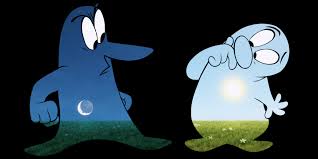
Image 1- Day and Night. Retrieved from, <http://www.pixartalk.com/shorts/day-night/>
ATTENTION ALL STUDENTS!!
A mob of evil vampires are trying to take over the world! To help save the world you need to find out what causes day and night. Once you know this, you can educate scientists, who can then use their technology to chase the vampires into daylight. Good luck on your mission.
Task
Your Mission Is:
1. Work with a partner to guess what causes day and night.
2. Individually, research the causes of day and night and key terms that relate to day and night using a variety of internet resources.
3. Compare guesses against facts and discuss how your thinking has changed.
4. Work with your partner to design a poster that demonstrates the causes day and night.
5. Create a two minute presentation to present what you have learnt to the Australian Scientist team.
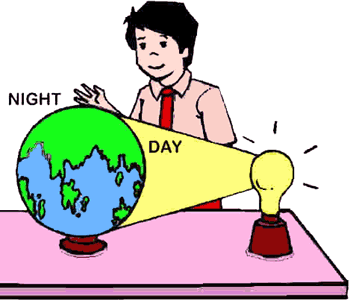
Image 2- Universe Cycle. Retrieved from, <http://www.msnucleus.org/membership/html/k-6/uc/earth/1/uce1_1a.html>
Process
Process
** Very Important- Record predictions/research in your Science journals, use the below numbering system to record answers.**
Image 3- Shower of Roses. Retrieved from <http://showerofroses.blogspot.com.au/2013/10/making-marshmallow-molecul…;
1. Work with a partner to guess what causes day and night. Use your prior knowledge when making your predictions (think about where the sun goes at night time).
2. Click on and read the interactive story below. Has this changed your thoughts on the causes of day and night? Discuss with your partner and record.
http://www.beaconlearningcenter.com/weblessons/AsTheEarthTurns/turn21a.htm
3. Which image do you think best reflects ‘rotation’? Explain why you picked the image you have and record.
1)
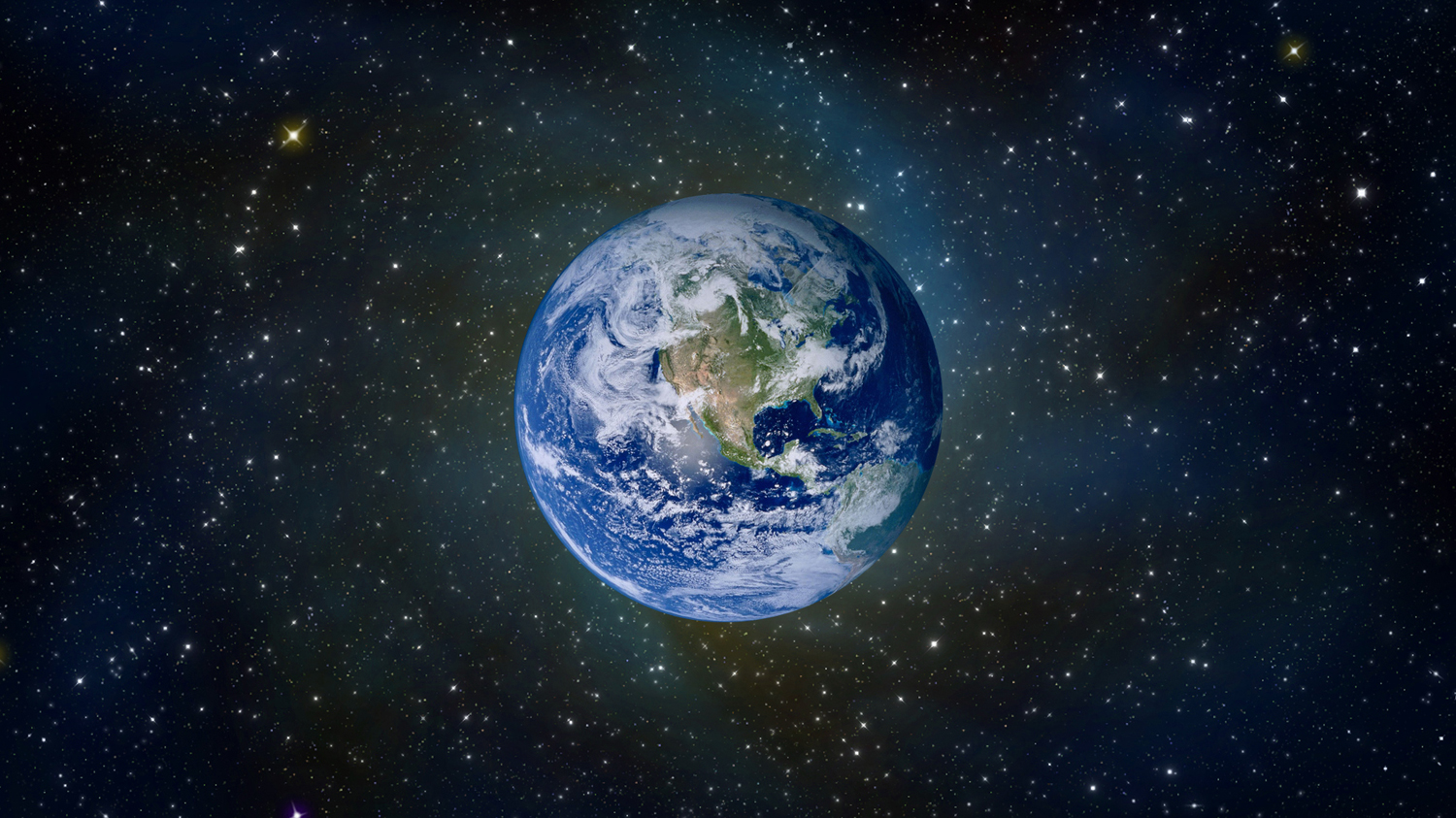
Image 4- Why the world didn't end yesterday. Retrieved from http://www.nasa.gov/topics/earth/features/2012.html
2)
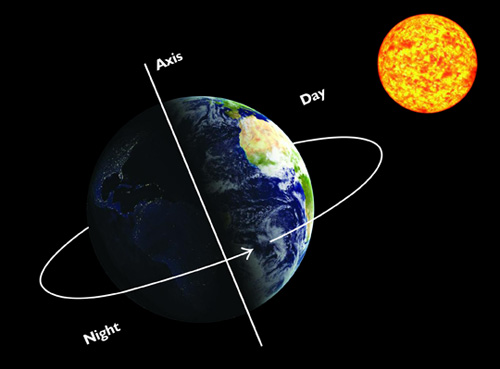
Image 5- The Earths Place in Space. Retrieved from http://science.jrank.org/kids/pages/221/EARTH-S-PLACE-IN-SPACE.html
3)
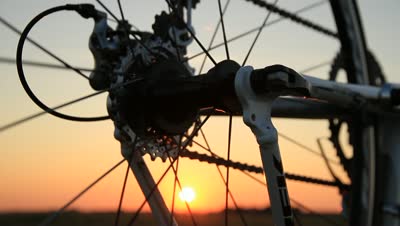
Image 6- Bicycle Wheel. Retrieved from http://footage.shutterstock.com/clip-2428028-stock-footage-bicycle-whee…
4. Click on and read through the websites below. Record in your own words what rotation means (note down anything else you find interesting). After reading about rotation, would you change the image you chose above? Record why or why not.
http://resources.woodlands-junior.kent.sch.uk/time/
http://www.windows2universe.org/the_universe/uts/earth2.html
4. Now predict and record how long it takes the Earth to rotate around the sun. Tell me why you selected this answer. Then click on the website below and listen to the song. Was your answer correct? Discuss with your partner if it was or wasn't and why.
https://www.youtube.com/watch?v=ZoG1pF_r5zU
5. Take this short quiz, to test what you have learnt about day and night. What do you think might happen if we didn't have any sunlight? Discuss this with your partner and come up with a prediction and record.
http://www.childrensuniversity.manchester.ac.uk/interactives/science/earthandbeyond/dayandnight/
6. Collaborate with your partner and design a poster to teach the Scientist team about day and night. Use the information recorded in your journals to assist in the design of your poster. You might want to include diagrams or a picture series.
7. Lastly, you and your partner must present your findings to the scientists. Create a two minute presentation (one minute per student) to discuss with your poster. You may want to demonstrate the rotation of the Earth and how this impacts sunlight. You could also highlight how your thinking changed throughout the research process. You can be creative as you like.
Evaluation
Evaluation
Image 7- The Telegraph. Retrieved from http://www.telegraph.co.uk/news/9782323/Teacher-bias-gives-better-marks…
Students, the below rubric is what you I will be using to assess your individual performance. Please read through this careful and ensure you understand what is required of you. If you have any questions please ask the teacher.
Rubric
| Criteria | 1 | 2 | 3 | 4 | Score |
| Prediction/ Research Influence |
Predictions aren’t justified and no evidence is provided on how research influenced these predictions. |
Some predictions are justified with minimal evidence on how research influenced these predictions |
Most predictions are justified with evidence on how research has influenced these predictions. |
All predictions are justified with clear evidence on how research has influenced these predictions. |
|
|
Facts |
Minimal facts were found correctly. |
Some facts were found and recorded correctly. |
Most facts were found and recorded correctly. |
All facts were found and recorded correctly. |
|
|
Group Poster/ Presentation |
Graphics do not support the accompanying explanation and appear to be randomly chosen. Ideas and understanding are poorly demonstrated in the presentation. |
Graphics support some of the accompanying explanations. Some ideas and understanding are demonstrated in the presentation. |
Graphics support the accompanying explanation. Ideas and understanding are clearly demonstrated in the presentation. |
Graphics fully support accompanying explanation with relevant examples provided. Ideas and understanding demonstrated exceptionally in the presentation. |
|
| Total |
Conclusion
Great job!

Image 8- Thumbs up Smiley. Retrieved from <http://www.clipartbest.com/thumbs-up-smily>
The scientists used the information you presented to them to save the world.
You are all heroes!!
Now, take a moment to reflect on what you have learnt, pick two things and tell your teacher.
Credits
Referencing
ACARA, Australian Curriculum, Assessment and Reporting Authority. (2013). The Australian
curriculum: Science. Retrieved from, http://ausvels.vcaa.vic.edu.au/Level3
Alcorn, C. (2003). Improving Student Knowledge through Experiential learning- A Hands-
On statics Lab at Virginia Tech. Retrieved from, http://scholar.lib.vt.edu/theses/available
/etd-07012003-215241/unrestricted/ETD-AlcornReport-072803.pdf
Coffman,T. (2013). Using Inquiry in the Classroom. Retrieved from,
http://reader.eblib.com.au.ezproxy.lib.swin.edu.au/%28S%28uo31dkm1jr2w2…;
/Reader.aspx?p=466794&o=132&u=mS%2fFBawK4a4qta5vrn6xiA%3d%3d&t=1399104706&
h=EDA057A67481EDB26E06AC1FE0446E34797318E1&s=12610193&ut=405&pg=39&r=img&c=-1&pat=n&
cms=-1
Edwards, C. M., & Parr, B. (2004). Inquiry-Based Instruction in Secondary Agricultural
Education: Problem Solving- An Old Friend Revisited. Retrieved from, http://pubs.aged.tamu.edu/jae/pdf
/Vol45/45-04-106.pdf
Piaget, J. (1966). The psychology of intelligence and education- Child Education. Taylor &
Francis:New York
Slavin, R. E. (2003). Educational Psychology, 7th Ed. Allyn and Bacon: New York.
Images
Image 1- Pixar. (n.d). Day and Night.. Retrieved from, http://www.pixartalk.com/shorts/day-night/
Image 2- MsNucleus. (n.d). Universe Cycle. Retrieved from, http://www.msnucleus.org/membership/html/k-
6/uc/earth /1/uce1_1a.html
Image 3- Shower of Roses. (n.d) Shower of Roses. Retrieved from,
http://showerofroses.blogspot.com.au
/2013/10/making-marshmallow-molecules.html
Image 4- NASA. (n.d). Why the world didn't end yesterday. Retrieved from http://www.nasa.gov/topics/earth/features/2012.html
Image 5- The Earths Place in Space. (n.d). Retrieved from http://science.jrank.org/kids/pages/221/EARTH-S-PLACE-IN-SPACE.html
Image 6- Shuttershock. (n.d) Bicycle Wheel. Retrieved from http://footage.shutterstock.com/clip-2428028-stock-footage-bicycle-whee…
Image 7- Henry Julie. (2013).The Telegraph. Retrieved from http://www.telegraph.co.uk/news/9782323/Teacher-bias-gives-better-marks…
Links used in webquest
Teacher Page
This webquest is designed for a Level three class when teaching Earth’s rotation and the causes of day and night (ACSSU048), (ACARA, 2014). Students are encouraged to make predictions (ACSSU048) and represent and communicate findings in a variety of ways (ACSIS060), (ACARA, 2014).
Experiential and inquiry learning is used through this resource. Students are immersed in an authentic learning environment, where they are given the chance to directly interact with materials. Students acquire, apply knowledge and skills in an immediate setting through an interactive medium (ICT). In doing so, students form abstract concepts and generalisations, test the implications of these concepts using concrete experiences and reflect on these observations (Alcorn, 2003). Knowledge construction occurs throughout this process, where students build and refine constructs of knowledge through the process of accommodation and assimilation (Piaget,1966). This allows students to form opinions and make sense of the world around them in a way that is meaningful and relevant.
Critical thinking and higher order thinking skills are promoted throughout this resource. Students are encouraged to explore ‘why’ they have formed certain opinions and reflect upon these. When students use critical thinking to explore big ideas, information becomes more relevant and they move beyond just regurgitation of facts (WEBQUEST). This moves students into a deeper realm of understanding through identification and subsequent application of solutions to a topic (Parr & Edwards, 2004). Blooms Taxonomy is utilised in this resource to develop higher order thinking skills. Students move through each stage when engaging in this resource, eventually analysing and synthesising information when presenting their findings to the class (Alcorn, 2003).
Webquests provide students with authentic tasks that are relevant to their everyday life. Students are engaged in learning by being able to use a technology tool that enables them to review current and up-to-date information (Webquest). A variety of safe and age appropriate websites (videos, interactive stories and songs) have been included on this resource to cater to all learning styles. This resource has been designed for the learner, therefore explicit step by step instructions have been included. This ensures easy navigation and it sets out clear student expectations. Students learning is maximised by incorporating both independent and social learning. Students collaborate with peers to create new knowledge (social learning) and work independently to learn at their own pace, without the pressure of keeping up with the class; the learner can then take control of and responsibility for their own learning (Slavin, 2003).