
Introduction
In this unit you will learn about the events that occured in the British colonies that set the stage for the American Revolution. You will also explore the battles fought between England and their allies and the American colonies and their allies. Last you will explore the creation of the American government.
Task
You have been hired by PBS to create educational activities to teach students about the causes and the impacts of the American Revolution. You will create several media rich activities to educate American school children about this important historic event.
Process
Step One: Conflict in the New World
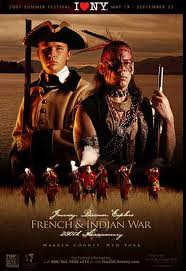
The French and Indian War: (AKA The Seven Year War)
I. Read and follow the animation on the website below then answer the following questions about the French and Indian War?
http://www.revolutionarywaranimated.com/FrenchAnimation.html
1. what action in 1753 causes tensions to increase between New France and the British colonist.
2. What is the result of Tanacharison Killing Jumonville?
3. What mistake(s) does General Braddock make why fighting the battle to capture Fort Duguesne?
4. What were the results of the battle at Fort William Henry?
5. How does British General Wolfe capture Quebec, and where does this battle take place?
6. How does the 1763 Treaty of Paris affect each of the parties involved in the French and Indian War?
British:
French:
Spanish:
Colonist:
Native Americans:
II. Using the informatiion from the website, create a prezi to explain the following aspects of the French and Indian War.
a. events that led up to the French and Indian War.
b. Braddock mistakes the Native Warriors ability to fight
c. French victories (location, date, impact)
d. English Victories (location, date, impact)
e. treaty impact on France, Canada, England, Colonist and Native Americas (when dividing work, this one should be done alone. the other four can be split by the other two members)
Time for Test (Unit 2 Test One)
Step Two: Road to Revolution
http://www.masshist.org/revolution/topics.php
The first website is an overview of the events that led to the American Revolution, and the second website gives more specific details of those events. Your assignment is to create a (historic fiction) children's book from the perspective of a colonial merchant, colonial housewife or a colonial child to discuss the 15 events included on the weibsite "The Coming of the American Revolution". The facts that you include in your story must be historically accurate and be explained by its effect on the story teller's life.
Step Three: Fighting for Independence
http://teachingamericanhistory.org/static/neh/interactives/americanrevolution/
https://docs.google.com/spreadsheets/d/19pPmfCKfi8R1oraYggLqLcCJgPn-aIIYW40IS02pItw/edit?usp=sharing
Using the above website, and a power point template, you will summarize and analyze the major battles of the American Revolution.
The power point template is in you American History folder for Ms Tyner's edmodo account.
Time for Test: Unit Two Test 2
Step Four: Establishing a New and Lasting National Government for America
A. Read the information on the web-site linked below. after you have finished reading go to the two online activity located at the bottom of the page.
B. Textbook Reading
http://www.hillcrestweb.com/USHist/A3B05AAD.pdf
1. What political ideals of the colonial period survived in the new system of government?
2. Why did differences between the states cause problems of representation in the new government?
3. What is a confederation?
4. What was the basic difference between the Land Ordinance of 1785 and the Northwest Ordinance of 1787?
5. What weakness in the Confederation was highlighted by the actions of Rhode Island?
6. Why were the states afraid of centralized authority and a strong national government?
http://www.hillcrestweb.com/USHist/A3B05BAD.pdf
1. Why did the news of Shays’s Rebellion make states decide to participate in the Philadelphia convention?
2. What was the Great Compromise and how did it reconcile the interests of the small states with
the interests of the more populous states?
3. What was the three fifths compromise, and what issues did it settle?
4. Describe the components of the Virginia Plan and the New Jersery Plan.
5. What was the primary goal of creating a system of checks and balances in the American government?
6. What was the primary goal of creating a federalism form of government?
http://www.hillcrestweb.com/USHist/A3B05CAD.pdf
1. What were the Antifederalists’ major arguments against the Constitution?
2. What were the arguments made by the Antifederalist for adding a bill of rights to the Constitution?
3. What were the arguments made by the Federalist for not adding a bill of rights to the Constitution?
4. Who were the leaders of the Antifederalist group?
5. Who were the leaders of the Federalist group?
6. Describe the process that the proposed constitution had to go through in order for it to be ratified and become the legal government of the United States?
Time for Test: Unit 2 test 3
Evaluation
Use this check sheet to ensure that you include all
14 events in your children’s book.
|
Event |
Included in book |
|
1. The proclamation of 1763 |
|
|
2. The Sugar Act |
|
|
3. The committee of Correspondence |
|
|
4. Stamp Act |
|
|
5. Sons of Liberty |
|
|
6. Townshend Act |
|
|
7. Boston Massacre |
|
|
8. Tea Act |
|
|
9. Boston Tea Party |
|
|
10. Coercive/Intolerable Acts |
|
|
11. first continental congress |
|
|
12. Lexington and Concord |
|
|
13. Second continental Congress |
|
|
14. Declaration of Independence |
|
Use the following rubric to ensure full credit for children's book in step two.
|
| CATEGORY | 4 | 3 | 2 | 1 |
| Focus on Assigned Topic | The entire story is related to the assigned topic and allows the reader to understand much more about the topic. |
85% of the story is related to the assigned topic. The story wanders off at one point, but the reader can still learn something about the topic. |
77% of the story is related to the assigned topic, but a reader does not learn much about the topic. | No attempt has been made to relate the story to the assigned topic. |
| Accuracy of Facts | All 14 facts presented in the story are accurate. | 85% of the 14 facts presented in the story are accurate. | 77% facts presented in the story are accurate. | There are several factual errors in the story. |
| Organization | The story is very well organized. One idea or scene follows another in a logical sequence with clear transitions. | The story is pretty well organized. One idea or scene may seem out of place. Clear transitions are used. | The story is a little hard to follow. The transitions are sometimes not clear. | Ideas and scenes seem to be randomly arranged. |
| Neatness | The final draft of the story is readable, clean, neat and attractive. It is free of erasures and crossed-out words. It looks like the author took great pride in it. | The final draft of the story is readable, neat and attractive. It may have one or two erasures, but they are not distracting. It looks like the author took some pride in it. | The final draft of the story is readable and some of the pages are attractive. It looks like parts of it might have been done in a hurry. | The final draft is not neat or attractive. It looks like the student just wanted to get it done and didn\'t care what it looked like. |
| Illustrations | Original illustrations are detailed, attractive, creative and relate to the text on the page. | Original illustrations are somewhat detailed, attractive, and relate to the text on the page. | Original illustrations relate to the text on the page. | Illustrations are not present OR they are not original. |
| Spelling and Punctuation | There are no spelling or punctuation errors in the final draft. Character and place names that the author invented are spelled consistently throughout. | There is one spelling or punctuation error in the final draft. | There are 2-3 spelling and punctuation errors in the final draft. | The final draft has more than 3 spelling and punctuation errors. |
| Requirements | All of the written requirements (# of pages, # of graphics, type of graphics, etc.) were met. | Almost all (about 85%) the written requirements were met. | Most (about 77%) of the written requirements were met, but several were not. | Many requirements were not met. |
Date Created: Jul 23, 2014 09:25 am (CDT)