Introduction
Welcome. In this WebQuest, you will explore one of the most enduring literary mysteries: The Shakespearean Authorship Question. For centuries, scholars have debated if William Shakespeare of Stratford-upon-Avon truly penned the canon attributed to him. This WebQuest will guide you through key arguments and evidence on both sides of the controversy with the use of historical documents, literary analysis and the perspectives of various scholars.
As Sonia Melilli (n.d.) explains, a “WebQuest is a teaching strategy that allows students to obtain information from the Internet through a teacher-led process. In other words, WebQuest is a research- and inquiry-oriented learning method that fosters critical thinking and collaborative learning" (para. 1). In this WebQuest, we will not be solving the mystery of the Authorship Question but instead gaining an understanding of the various viewpoints, evidence and implications of the controversy to literature and history.
Figure 1
From left to right: The Cobbe Portrait (1610), the Chandos Portrait (early 1600s) and the Droeshout Portrait (1622)
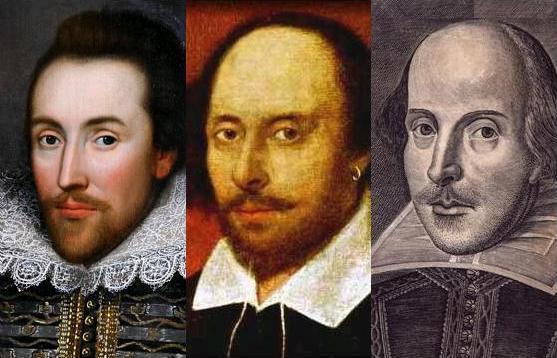
Note. From Wikimedia Commons by Brice Stratford, 2009. In Wikimedia Commons. An image showing direct comparisons between the Shakespeare of the Cobbe Portrait, the Chandos Portrait and the Droeshout Engraving. Derived from http://shakespeareportrait.freehosting.net/index.html
Task
Your task is to thoroughly research the Shakespeare authorship question, focusing on the main arguments for and against the traditional attribution to William Shakespeare of Stratford-upon-Avon, and considering at least two prominent alternative candidates (e.g., Francis Bacon, Edward de Vere, Christopher Marlowe).
Based on your research, you will:
-
Summarize the core arguments presented by both Stratfordian (supporters of Shakespeare of Stratford) and Anti-Stratfordian (those who doubt Shakespeare's authorship) scholars.
-
Analyze the evidence put forth by proponents of at least two alternative candidates, identifying their strengths and weaknesses.
-
Formulate your own informed perspective on the authorship question, supported by evidence and critical reasoning.
-
Present your findings in a short persuasive essay (about 300-500 words).
Figure 2
Weighing the evidence in the Shakespeare Controversy

Note. This figure illustrates the debate surrounding the Shakespeare authorship question, comparing the traditional view with various alternative candidates. Created by Erin Miller using Canva.
Process
Follow these steps to complete your WebQuest. The resources for this exercise can be located at the bottom of this section.
Step One: Traditional View
Objective: Understand the conventional arguments supporting William Shakespeare of Stratford as the author.
Action: Using the resources provided below, research the biographical details of Shakespeare, his family, his life in Stratford and London, and the evidence typically cited by Stratfordian scholars. Pay attention to the evidence used to connect the Stratford man to the plays and poems.
Step Two: Anti-Stratfordian Arguments
Objective: Explore the reasons why some scholars question the traditional authorship.
Action: Investigate the primary arguments raised by Anti-Stratfordians. These often include:
The apparent lack of education and travel by the Stratford man compared to the vast knowledge displayed in the works.
The absence of personal papers (letters, manuscripts) from Shakespeare.
The contents of Shakespeare's will (which mentions property but no books or literary assets).
The social status of the Stratford man versus the aristocratic themes and courtly knowledge in the plays.
Step Three: Alternative Candidates
Objective: Examine the cases for at least two alternative candidates.
Action: Consider the prominent candidates proposed by Anti-Strafordians and research the specific arguments and circumstantial evidence presented by their supporters. For each candidate, consider:
Their biographical details (education, travel, social standing, literary connections).
Any proposed connections to the Shakespearean works
The historical context surrounding their lives and deaths.
Step Four: Critical Analysis and Synthesis
Objective: Compare and contrast the different arguments and evidence and synthesize your understanding.
Action: Compare, evaluate and synthesize using the following questions and directions.
Compare: How do the arguments for the alternative candidates directly challenge the Stratfordian view? Are there overlaps or contradictions?
Evaluate: What are the strengths and weaknesses of each argument (Stratfordian and Anti-Stratfordian, and those for alternative candidates)? Consider the quality of evidence, logical fallacies, and potential biases.
Synthesize: Begin to form your own informed perspective. This might involve acknowledging the complexities of the issue, recognizing the limitations of available evidence, or leaning towards a particular viewpoint.
Step Five: Crafting Your Essay
Objective: Clearly and persuasively present your research and conclusions.
Action: In your essay, address all aspects of the "Task" section. Ensure your arguments are supported by the evidence you've gathered. Use clear, concise language and maintain an academic tone. Your essay should be about 300 – 500 words and formatted in MLA.
Resources
Read "Who Wrote Shakespeare?" https://shakespeareoxfordfellowship.org/discover-shakespeare/
Explore "The Simple Case for Shakespeare" https://www.bardweb.net/content/ac/simple_case.html
Investigate Mark Twain's "Is Shakespeare Dead?" https://www.gutenberg.org/files/2431/2431-h/2431-h.htm
View "Did Shakespeare Write his Plays?"
Consider "What Shakespeare Teaches Us about Modern Conspiracy Theories"
Evaluation
Your WebQuest will culminate with the composition of a short essay (300-500 words). Please see the rubric below for the basis of evaluation.
Shakespeare Authorship Question WebQuest Essay Rubric
|
Criteria |
Not Met 0-13 |
Needs Improvement 10-14 |
Accomplished 15-19 |
Exemplary 20-25 |
| Thesis | The thesis is unclear or missing. | The thesis statement is present but is not clear, does not answer the prompt and/or is not supported by the body of the essay. |
The thesis statement is clear, present, answers the prompt and mostly serves as the focal point of the essay. |
The thesis statement is present and provides the reader with a clear understanding of the student’s position, premise or focus in respect to the prompt. The thesis serves as the consistent focal point of the essay. |
| Analysis | The content does not answer the prompt and/or lacks originality. The student’s ideas are not supported with evidence. | The content does not fully answer the prompt and/or reflects only some original ideas. Evidence is used to support the student’s ideas. | The content serves to answer the prompt and support the thesis. Ideas are developed and reflect original thinking. Evidence is used to support the student’s ideas. | The content serves to answer the prompt and support the thesis. Ideas are robustly developed and reflect original thinking. Evidence is used to support the student’s ideas. |
| MLA Formatting | MLA formatting is not evident, the citations are inaccurate, and/or the essay is not at least 300 words in length. | The essay includes an MLA header, heading, title, in-text citations and a works cited page, but the formatting is not always accurate. The essay is submitted as a Microsoft Word document and at least 300 words in length. | The essay is formatted in MLA and includes an accurate header, heading, title, in-text citations and a works cited page. The essay is at least 300 words in length and submitted as a Microsoft Word document. | The essay is formatted in MLA and includes an accurate header, heading, original title, in-text citations and a works cited page. The essay is at least 300 words in length and submitted as a Microsoft Word document. |
| Grammar and Mechanics | The essay displays numerous grammar and mechanics errors that detract from the overall readability of the essay. | The essay displays numerous grammar and mechanics errors, but the errors do not affect the readability of the essay. | The essay demonstrates thorough proofreading and displays few grammar and mechanics errors. | The essay demonstrates exceptional proofreading and is free of grammar and mechanics errors. |
Conclusion
The Shakespeare Authorship Question invites us to consider how we attribute creative genius, the nature of evidence and the inherent biases that appear across historical inquiry. By completing this WebQuest, you have engaged with various perspectives, developed your research and analytical skills, and gained a deeper understanding of Shakespeare and the complexities of literary history. Whether you determined you are a Stratfordian, Anti-Stratfordian, or somewhere in between, this controversy provides opportunity for critical thinking and scholarly discourse.
I look forward to reading your thoughts!
Credits
Because this course requires MLA formatting, and many students are learning MLA formatting, this listing has been provided. You may copy and paste the Works Cited listings from this page for the purposes of citing in your essay. Be sure to include in-text citations (signal phrase and/or end-parenthetical) indicating where in your essay these works are used.
Works Cited
Melilli, Sonia. “What is WebQuest and why is it good for learning?” Mega Italia Media. n.d., www.dyndevice.com/en/news/what-is-webquest-and-why-is-it-good-for-learning-ELN-897/
Pressley, J.M. “The Simple Case for Shakespeare.” Shakespeare Resource Center, n.d., www.bardweb.net/content/ac/simple_case.html
“Who Wrote Shakespeare? Shakespeare Authorship 10.” Shakespeare Oxford Fellowship. shakespeareoxfordfellowship.org/discover-shakespeare/
TED Ed. “Did Shakespeare write his plays? - Natalya St. Clair and Aaron Williams.” YouTube, 24 February 2015, www.youtube.com/watch?v=K-aAUwAFZlQ
TEDx Talks. “What Shakespeare teaches us about modern conspiracy theories | Dr. Paul Budra | TEDxSurreySalon” YouTube, 24 December 2024, www.youtube.com/watch?v=MzSm-b_4Tmc&t=25s
Twain, Mark (1909). Is Shakespeare Dead? Project Gutenberg,
www.gutenberg.org/files/2431/2431-h/2431-h.htm