Introduction
As a student living in the digital age, I am constantly connected to friends, classmates, and communities through the internet. But I've also come to realize that the same tools that bring us together can be used to harm others. Cyberbullying is a serious problem that affects people my age all over the world.
Through this WebQuest, I explore what cyberbullying is, its impact, and most importantly, how I can help prevent it. This is my journey to becoming a responsible digital citizen.
Task
My goal for this WebQuest is to learn about cyberbullying and create an awareness campaign. By the end of this project, I will:
- Define cyberbullying and explain how it happens.
- Understand how it affects students emotionally and socially.
- Look at laws and rules that guide our behavior online.
- Create an Anti-Cyberbullying Awareness Poster or Presentation.
- Write my personal Digital Pledge to stand against cyberbullying.
Process
Step 1: What is Cyberbullying?
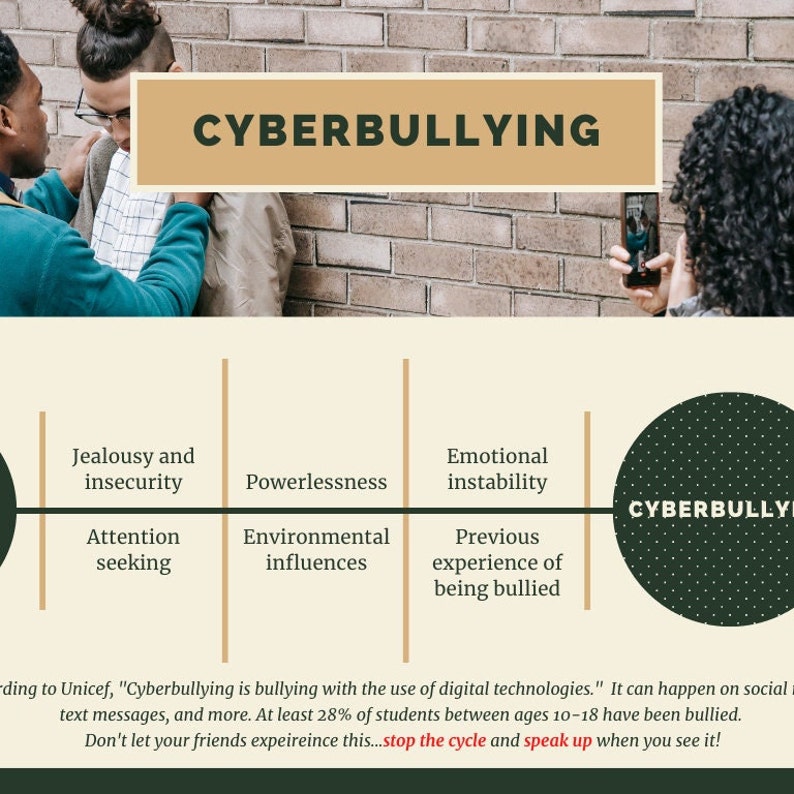
Cyberbullying is when someone uses phones, social media, or the internet to intentionally hurt, humiliate, or scare another person. It can happen when someone sends hurtful messages, shares embarrassing photos or videos, or spreads false rumors online. According to the Cyberbullying Research Center, about 37% of students between 12–17 have been bullied online at least once, and about 30% have admitted to bullying others online. These statistics highlight how common this problem is and why it needs to be taken seriously.
Step 2: Real-Life Stories
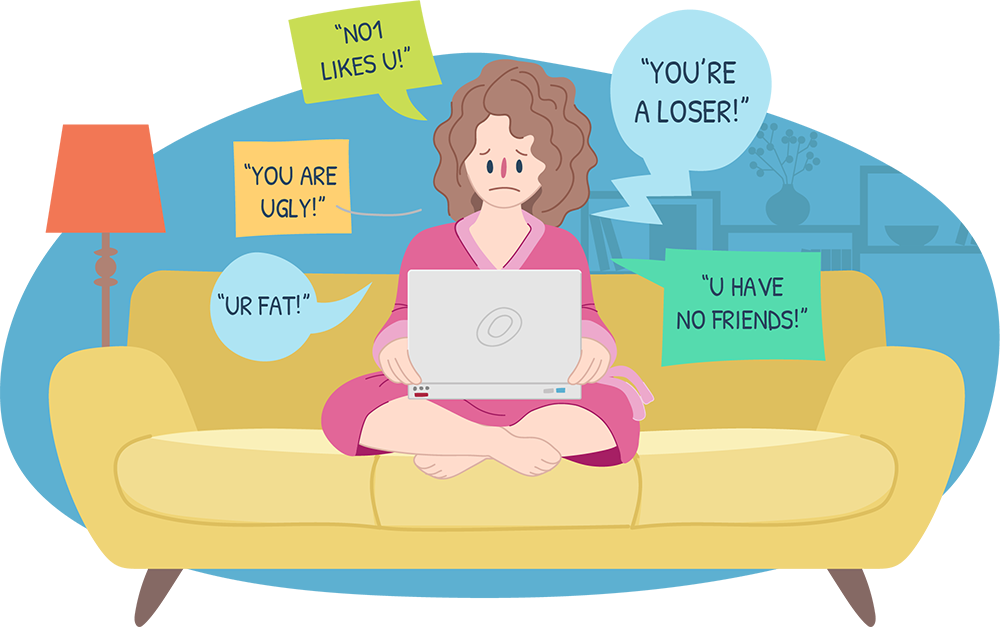
Sarah, a 14‑year‑old student, started receiving hurtful messages and threats online from anonymous accounts. Rumors about her circulated on social media, making her feel ashamed and scared to go to school.
How did the person being bullied feel?
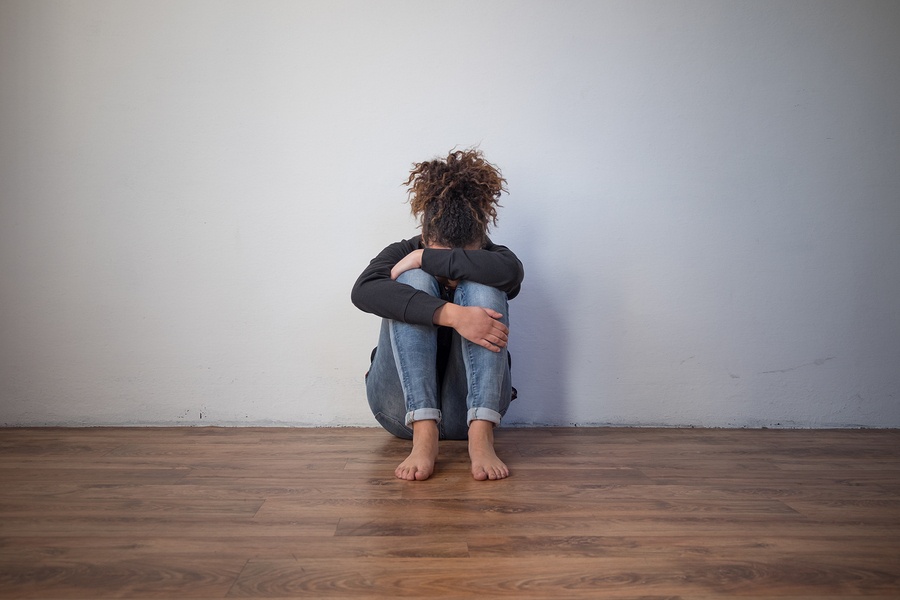
Sarah felt sad, isolated, and frightened. The messages made her doubt herself and lose confidence. She felt like she had nowhere to turn and feared that telling someone would make the situation worse.
What could I do to help in that situation?
If I witnessed this happening, I could show Sarah support by listening to her and reassuring her that she’s not alone. I would encourage her to save evidence of the bullying and report it to a trusted teacher or parent. I could also stand up for her online by reminding others to be respectful and kind.
What can schools and students do to prevent this?
Schools can create a safe environment by educating students about cyberbullying and its effects, offering counseling services, and making it easy to report incidents anonymously. Students can help by treating others online with respect, standing up for peers who are bullied, and spreading awareness about the harm caused by cyberbullying.
Video explaining the problem of cyberbullying in schools and what should be done to combat it
Step 3: My Awareness Project
Step 4: My Digital Pledge for Respect and Safety
🌟 I pledge to treat everyone online with respect, kindness, and compassion.
🌟 I will never share or spread hurtful messages or images that can cause harm.
🌟 I will stand up for those who are bullied, and be their voice when it’s hard for them to speak.
🌟 I will report cyberbullying whenever I witness it, and help create a safer digital space.
🌟 I will use the internet to build connections, uplift others, and make a positive difference every chance I get.
Evaluation
| Criteria | Excellent (5) | Good (4) | Fair (3) | Needs Work (1–2) |
|---|---|---|---|---|
| Clarity of Cyberbullying Definition | Clearly defined in own words, including examples and statistics | Definition is mostly clear, includes examples | Definition lacks clarity or examples | Definition is unclear or missing |
| Use of Facts/Examples | Strong use of statistics, credible sources, and real examples | Some statistics and examples used effectively | Limited statistics and examples used | No statistics or examples used |
| Creativity of Final Product | Original, visually engaging, and clearly communicates the message | Visually appealing and communicates the message well | Some creativity, but lacks clarity or impact | Final product lacks creativity or focus |
| Personal Reflection | Thoughtful, in-depth reflection of learning and understanding | Adequate reflection, some connections to learning | Limited reflection, lacks depth | Little or no reflection on learning experience |
| Digital Pledge | Strong, passionate, and actionable pledge that promotes digital respect and safety | Clear pledge addressing digital respect and safety | Basic pledge with general ideas | Pledge lacks clarity, purpose, or actionable ideas |
Conclusion
This WebQuest helped me understand the dangers of cyberbullying and my role in stopping it. I believe that we can create a kinder, safer digital world if each of us commits to showing respect online. I am proud to take a stand and inspire others to do the same.
Teacher Page
Teacher Page.
Level: Diploma in Adult Education
Subject: The Role of Students in Combating Cyberbullying
Overview
This WebQuest aims to guide learners to understand the growing challenge of cyberbullying and its impact on students within the Zimbabwean context. It immerses students in exploring real-life stories, statistics, and policies that shape online behavior, with a special focus on the Zimbabwe Cyber and Data Protection Act and its role in promoting digital safety. The quest encourages students to think critically, collaborate, and apply problem‑solving strategies to create a safer online environment for themselves and others.
Through this journey, learners will gain a deeper understanding of the nature of cyberbullying, its effects on emotional well‑being, and its implications for academic performance and social life. The WebQuest promotes an appreciation for responsible digital citizenship, rooted in empathy, respect, and integrity. Upon completing the quest, students will be inspired to stand up for those targeted by online harassment and to build a culture of kindness, accountability, and mutual support within their schools and communities. In doing so, this WebQuest aims to foster a generation of students who understand the power of technology to connect and uplift, rather than to harm.