Introduction
The learning narrative is totally changing , where once textbooks and blackboards were the primary tools , now screens , keyboards and online platforms are becoming common.
This shift towards digitization in acquiring knowledge is transforming how we pass information through teaching , learning and the skills that are now essential.
The world is moving on more soft skills that will aid in navigating into the so called glass generation, things have started to seem more easy to access through a click , tap and short phrases stroke on a keyboard and everything pops up.
Task
Your mission is to create a comprehensive analysis and presentation of ,”THE VALUE OF DIGITISATION IN LEARNING PROCESSES'
The end result should go beyond a simple report and should be designed to inform a specific audience about the topic.
Choose any one of the provided topics below :
- A PROPOSAL FOR YOUR SCHOOL : Develop an engaging proposal to your school's administration outlining specific ways digitization could be further integrated or improved to enhance learning , supported by evidence of its value.
- A POSITION PAPER/ESSAY : Write a well-researched and argumentative paper that takes a clear stance on the overall value of digitization in learning, supported by evidence and addressing potential counter arguments.
- A PRESENTATION/VIDEO : Create a good presentation/video that illustrates the value of digitization in learning.( Provide evidence of research and reference .
Process
Initial Exploration s "Need to Know" (Connectivism s Constructivism):
-
- Begin by discussing as a team (or individually, if working alone) your initial thoughts and experiences with digitisation in your own learning. What digital tools do you use? What are your first impressions of their value?
- Use the initial resources to get a general overview of what "digitisation in learning" means and some commonly discussed benefits and challenges.
- Based on your initial understanding and the task, identify
what you need to research to fully address the prompt ("Need to Know" - PBL). Formulate specific questions you need to answer.
Researching the Landscape (Connectivism s Constructivism):
-
- Dive into the provided resources and conduct your own online searches to gather information on the benefits, challenges, and different facets of digitisation in learning.
- Look for evidence from research studies, articles from educational
experts, opinions from students and teachers, examples of digital tools and platforms, and reports from educational institutions or organizations.
-
- As you research, think about how different pieces of information connect. How does a specific digital tool relate to a particular learning theory? How do the benefits for students impact the role of teachers? This is where you actively connect ideas from various sources.
- Organize your research findings. Categorize information by benefits, challenges, perspectives, specific examples, etc. Use notes, digital mind maps, or shared documents. You are constructing your understanding by organizing and making sense of the information.
Analyzing Benefits and Challenges (Constructivism):
-
-
- Analyze the information you've gathered on both the positive and negative aspects of digitisation.
- Look for patterns and recurring themes in your research. What benefits are mentioned most often? What challenges seem most significant?
- Think critically about the evidence presented in your sources. Is it convincing? Are there any biases?
-
Exploring Different Perspectives (Connectivism s Constructivism):
-
-
- Actively seek out resources that present different viewpoints on digitisation in learning. How do teachers who have successfully integrated technology feel? What about those who are struggling? What do students enjoy or dislike about online learning? How do parents view screen time and digital learning?
- Compare and contrast these different perspectives. How do they align or differ? Understanding these various viewpoints is key to a nuanced understanding (Connectivism).
-
Synthesizing and Forming Conclusions (Constructivism s PBL):
-
-
- Bring together all your research and analysis. What is the overall picture? Weigh the benefits against the challenges.
- Formulate your own informed conclusions about the value of digitisation in learning processes. Is it universally good? Does its value depend on context, implementation, or access?
-
Based on your conclusions, brainstorm recommendations or key insights relevant to your chosen final product format
RESOURCES
General Information & Overviews:
• UNESCO - ICT in Education: (Focuses on Information and Communication Technology in education globally) - Search "UNESCO ICT in Education"
• World Economic Forum - The Future of Education: (Often includes discussions on technology's role) - Search "World Economic Forum Future of Education"
• Educause Review: (Articles and analysis on IT in higher education, often relevant to K-12) - https://er.educause.edu/
• Edutopia: (Resource on various education topics, including technology integration) - https://www.edutopia.org/ • UNESCO –The Digital learning turn in Africa https://unesdoc.unesco.org/ark:/48223/pf0000377725 Benefits of Digitisation:
• Articles on Personalized Learning: Search "personalized learning technology benefits"
• Articles on Access to Resources: Search "online learning resources access benefits"
• Articles on Collaboration Tools in Education: Search "digital collaboration tools learning benefits"
• Videos or articles featuring students/teachers who have benefited from digital tools.
• Challenges and Drawbacks of Digitisation: • Articles on the Digital Divide: Search "digital divide education inequality"
EXAMPLES OF DIGITISATION IN LEARNING PROCESSES

Digital Transformation Drives Development in Africa
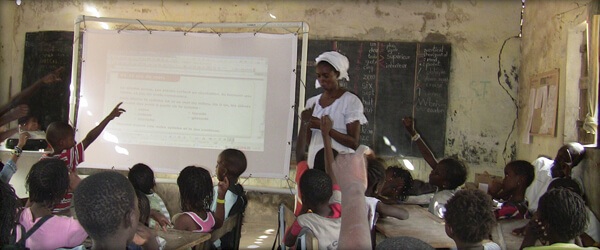
Solar Powered WhiteBoard Brings Interactive Learning to Rural Africa Schools
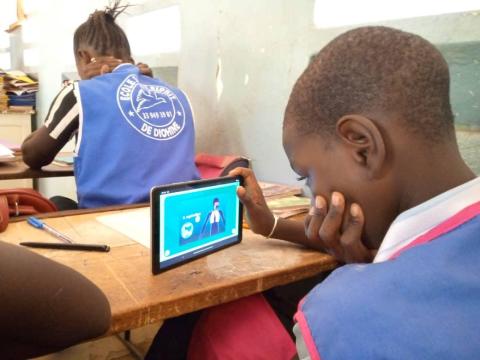
ProFuturo: Innovation for Effective and Affordable Education
Evaluation
Your analysis and presentation of 'The Value of Digitisation in Learning Processes' will be evaluated on the following rubric :
| Criteria | Excellent (5) marks | Good (3) marks | Satisfactory (2) marks | Fair (1) |
|---|---|---|---|---|
| Understanding of Digitisation | Demonstrates a thorough and nuanced understanding of the scope of digitisation in learning | Accurately identifies and explains key aspects of digitisation in learning processes | Identifies some aspects but lacks a comprehensive definition | Demonstrates limited understanding of what digitisation in learning entails |
| Analysis & Benefits | Provides a comprehensive and well-supported analysis of the diverse benefits of digitisation in learning | Analyses key benefits of digitisation for different stakeholders , provides some evidence | Identifies some benefits but provides limited detail or evidence | Identifies few or irrelevant benefits , lacks evidence |
| Analysis of Challenges | Provides a comprehensive and well-supported analysis of the significant challenges and drawbacks of digitisation | Analyses key challenges and drawbacks of digitisation , provides some evidence | Identifies some challenges but provides limited detail or evidence | Identifies few or irrelevant challenges , lacks evidence |
| Organisation & Quality | Product is exceptionally well-organised , clear , and easy to follow , analysis is presented logically | Product is generally well-organised and clear, main points are easy to understand | Product has some organisation but is sometimes unclear or hard to follow | Product is poorly organised and difficult to understand |
| Creativity & Engagement | Product is highly creative and engaging , effectively capturing the audience's attention | Product is reasonably creative and engaging for the chosen format and audience | Product shows some effort but is not particularly engaging | Product is very basic or lacks engagement |
TOTAL SCORE 45
Conclusion
You have now completed a significant investigation into the complex and evolving world of digitisation in learning. By acting as researchers and analysts, you have moved beyond simply using technology to critically examine its true value, considering both its potential and its limitations.
Through this process, you have experienced Project-Based Learning by tackling a real-world educational question. You have actively constructed your own understanding by wrestling with different data and perspectives (Constructivism). And you have utilized and navigated a network of online information to inform your conclusions (Connectivism).
The integration of digital technologies into education will continue to shape the future of learning. Your ability to critically evaluate these changes, understand their impact from various viewpoints, and propose thoughtful approaches is a valuable skill in our increasingly digital world.
Credits
- RESOURCES
- UNESCO - ICT in Education: (Focuses on Information and Communication Technology in education globally) - Search
"UNESCO ICT in Education"
-
- World Economic Forum - The Future of Education: (Often includes discussions on technology's role) - Search "World Economic Forum Future of Education"
- Educause Review: (Articles and analysis on IT in higher education, often relevant to K-12) - https://er.educause.edu/
- Edutopia: (Resource on various education topics, including technology integration) - https://www.edutopia.org/
- UNESCO –The Digital learning turn in Africa https://unesdoc.unesco.org/ark:/48223/pf0000377725
Benefits of Digitisation:
-
- Articles on Personalized Learning: Search "personalized learning technology benefits"
- Articles on Access to Resources: Search "online learning resources access benefits"
- Articles on Collaboration Tools in Education: Search "digital collaboration tools learning benefits"
- Videos or articles featuring students/teachers who have benefited from digital tools.
- Challenges and Drawbacks of Digitisation:
- Articles on the Digital Divide: Search "digital divide education inequality"
Teacher Page
Albert Dhafana Profile
HND Acc, BCom B&F, MSc SM, Cert. of Prof. Trusteeship, Grad. Cert. Spir.(Avila), IPMZ (LL,A&C) , PGDE (pend.), DBA (Cand.),
Albert is a seasoned organizational development practitioner with experience spanning from financial services, NGO /development sector in grants management, compliance and assurance, human capital management, academia as a lecturer, governance , researcher and mentor, in the Church and community as leader, counsellor and lay teacher and mentor
2002- 2007: Financial Services Sector in retail banking, mortgage-based lending and relationship management. Team Leader at branch level
2007 – 2016: Sub-Awards and Grants Management for a USAID and DFID funded nationwide franchise. Main responsibilities were compliance and assurance, site visits across the country, documents review and funds disbursement. Administration and human capital management for arguably largest local based NGO with presence is 70% of the country. Responsible for policies, assurance, procurement, transport and logistics, corporate governance advisory. Instrumental in the transition from a sub-grantee to direct funding
2017 – date: Human Capital Management, Pensions Administration, Corporate Governance, Programme implementation advisory for the biggest FBO in the country. Voted Best HR Manager for NGO Sector 2021 by IPMZ
Academia – research, lecturing and mentoring
A passionate community leader working with young people and professionals to create opportunities and advocacy for people centered development. A lay leader in Church with interests in participatory methods, justice and peace, identifying risk areas and advocate for child and vulnerable adults’ protection.