Introduction
The year is 2050. Earth has many serious problems: too many people, pollution, climate change, and fewer natural resources. Scientists and world leaders now believe that the future of humans may be in space. We must look beyond Earth—and Mars is the best choice.
For hundreds of years, people have asked questions about Mars. Is there water? Could people live there? Could life exist? Now, we are closer than ever to finding the answers. The first human mission to Mars is being planned, and you are part of the team!
You and your group will help plan this exciting and difficult mission. Your goal is to design everything people need to travel to Mars, survive, and build a base. You must think about many things:
-
How will people breathe, eat, and stay healthy?
-
What kind of house or shelter will protect them?
-
How can they talk to people on Earth?
-
What will they do every day on Mars?
You will need to read, do research, think creatively, and work in a team. At the end, your group will create a presentation or video to show your plan to the class. Your mission must be safe, smart, and interesting!
This is your chance to imagine the future and use English in a real-world task.
Are you ready to become astronauts, engineers, and explorers?
Your mission begins now.
Welcome to Mars.
Task
Your Task
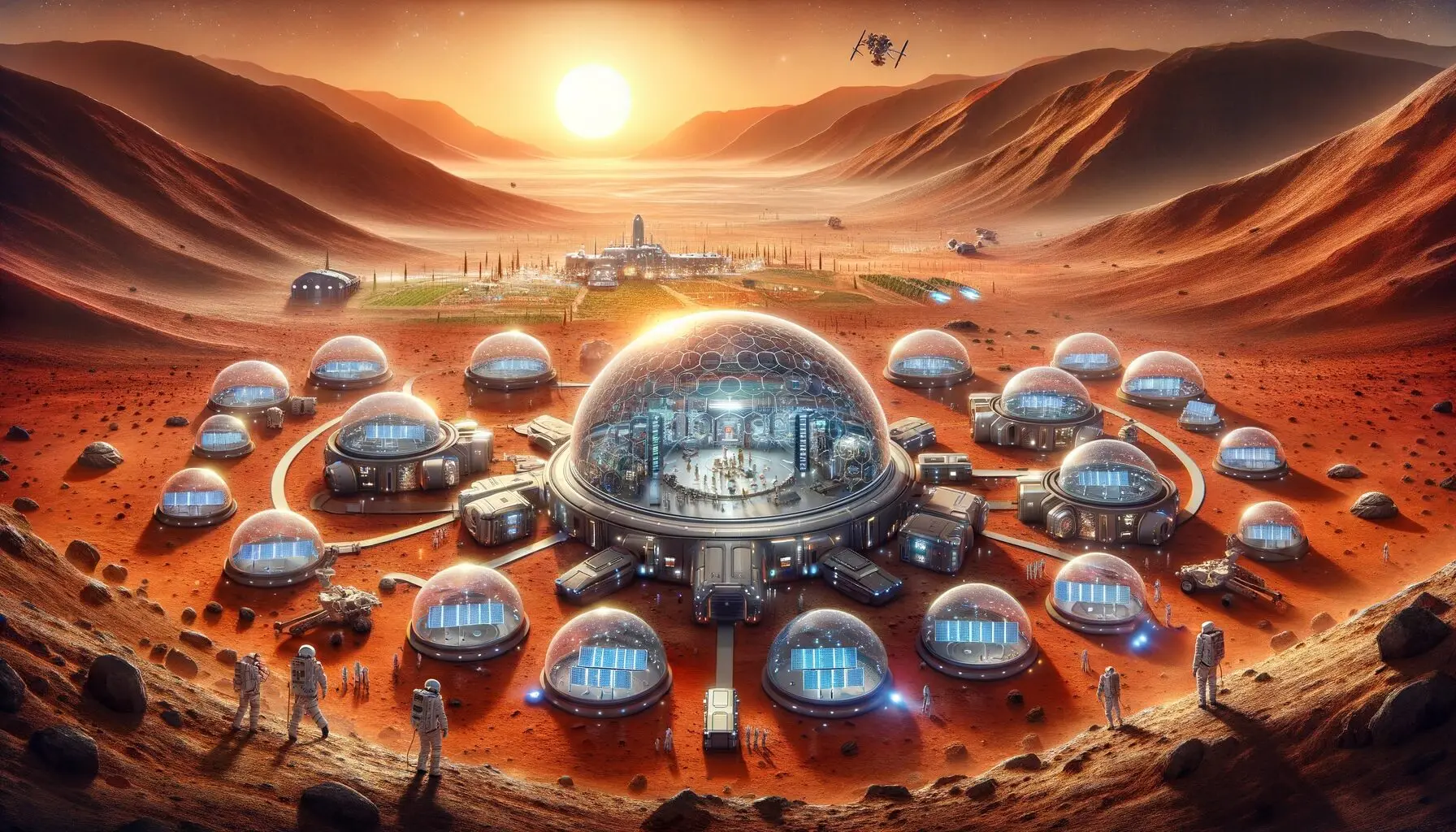
You are part of a special international team. Your job is to plan the first human mission to Mars. You will work in groups to create a full plan for living on the Red Planet.
At the end of the project, your team will present your plan to the class. Your final product can be:
-
a Google Slides presentation with pictures and explanations,
-
a short video (news report or interview),
-
or a poster or booklet that shows your ideas.
Your plan must include:
✅ A map or design of your Mars base
✅ A list of crew members and their jobs (engineer, doctor, pilot, etc.)
✅ A survival plan (how to get food, water, air, energy)
✅ Transport and communication systems (how to move and talk on Mars and with Earth)
✅ The main goal of your mission (for example, to study rocks, look for life, or prepare for more people)
✅ Challenges you might face and how you will solve them
You will:
-
Work in a group of 4–5 students
-
Do research (using videos, websites, or reading materials)
-
Plan your ideas and divide roles
-
Create your product (presentation, video, or poster)
-
Present your mission to the class (each student must speak)
Be creative, realistic, and clear. Use your English skills to explain, describe, and work together. Your mission depends on good planning and teamwork!
Process
To complete this web quest, you will follow these steps with your team. Each step is important for building a successful mission to Mars.
Step 1: Form Your Mission Team
Your teacher will divide the class into teams of 4–5 students. Each team is your Mars Crew.
Every student in the team will choose a special role:
-
🧠 Commander – leads the team and makes sure everyone works together
-
🔧 Engineer – plans the Mars base, shelter, machines, and vehicles
-
🧬 Scientist / Biologist – plans food, water, and health systems
-
💬 Communication Officer – prepares the presentation and helps with design
-
🩺 Doctor / Psychologist – thinks about health, safety, and mental well-being
(If you have fewer students, some can take two roles.)
Step 2: Do Research
Now it’s time to learn! Each team member will find information based on their role. Use the websites, videos, and documents provided by your teacher.
You can search for:
-
How do people survive in space?
-
What is life like on Mars?
-
How do space scientists grow food or get energy?
-
What dangers are there on Mars?
Take notes in English. You can use pictures, bullet points, or simple sentences.
Step 3: Plan Your Mission
Work together as a team to make a full plan. Use the information you found in Step 2. You can draw a map of your Mars base, decide who does what, and write about how you will survive.
Be sure to include:
-
Where you will live and how you build the base
-
What your crew will eat and drink
-
How you will get oxygen and power
-
What your team’s mission goal is (explore, test, build, etc.)
Step 4: Create Your Final Product
Now turn your ideas into a real product. You can choose:
-
A Google Slides presentation (with pictures, maps, and bullet points)
-
A short video (for example, a news report or mission update)
-
A poster or booklet with drawings and written descriptions
Evaluation
Your team can earn a maximum of 12 points. You will be evaluated in 4 categories. Read the table carefully to understand what is expected.
| Category | Excellent (3 pts) | Good (2 pts) | Needs Improvement (1 pt) |
|---|---|---|---|
| Content & Ideas | All parts of the mission are complete, logical, and creative | Most parts are complete, ideas are clear | Some parts are missing or hard to understand |
| Language Use | Uses rich vocabulary and correct grammar; few mistakes | Some mistakes, but meaning is clear | Many mistakes, difficult to understand |
| Teamwork | Everyone worked actively and spoke during the presentation | Most members helped and spoke | One or two people did most of the work |
| Presentation | Clear, well-prepared, creative and interesting | Understandable but could be more organized or lively | Difficult to follow or not well-prepared |
✅ Total: 12 points
-
11–12 points → 🌟 Excellent Mission!
-
9–10 points → 👍 Good Work
-
7–8 points → ✅ Mission Complete
-
6 or less → ⚠ Needs Improvement
Remember: A great team works together, shares ideas, and helps each other. Your English doesn’t have to be perfect—but you must try your best and communicate clearly!
Conclusion
Congratulations, astronauts! You have successfully completed your mission to Mars. You worked as a team, used your creativity, and practiced English to solve real-world problems.
Through this project, you learned:
-
How humans can survive on another planet
-
How to research and present ideas in English
-
How to work together and share responsibilities
-
How to think critically and creatively about the future
Even though your mission was imaginary, your ideas were real—and maybe one day, some of them will become true.

💬 Let’s Reflect:
-
What did you enjoy most about the project?
-
What was the most difficult part?
-
What new words or facts did you learn?
-
Would you like to live or work on Mars one day?
The future needs brave explorers, smart thinkers, and good communicators.
Keep learning. Keep dreaming. The universe is waiting.
Thank you, Team Mars!
Credits
Useful Sources for Your Project
You can use these websites and videos to find information, pictures, and ideas for your Mars mission. Make sure to take notes in your own words and save images you may want to include in your presentation or poster.
Websites:
-
NASA – Mars Exploration
https://mars.nasa.gov
– Find facts, photos, videos, and updates about Mars missions.
– Look at the “For Students” or “Mission” sections. -
European Space Agency – Mars
https://www.esa.int/Science_Exploration/Human_and_Robotic_Exploration/Exploration/Mars
– Learn how Europe helps explore space. Great for international perspective. -
National Geographic Kids – Mars Facts
https://kids.nationalgeographic.com/space/planet/mars
– Easy-to-read facts and cool visuals for young learners. -
Space.com – Living on Mars
https://www.space.com/topics/mars
– Articles and news about life on Mars and future missions. Use simpler articles.
🎥 Videos (YouTube – use with teacher’s help or permission):
-
TED-Ed – What Would It Be Like to Live on Mars?
https://www.youtube.com/watch?v=3pWwFjK6GZw -
NASA’s Perseverance Rover Animation
https://www.youtube.com/watch?v=4czjS9h4Fpg -
SciShow Kids – What’s It Like on Mars?
https://www.youtube.com/watch?v=Pm2NLrEJvC4 -
ESA – How to Live on Mars
https://www.youtube.com/watch?v=UAm9escDxuA