Introduction
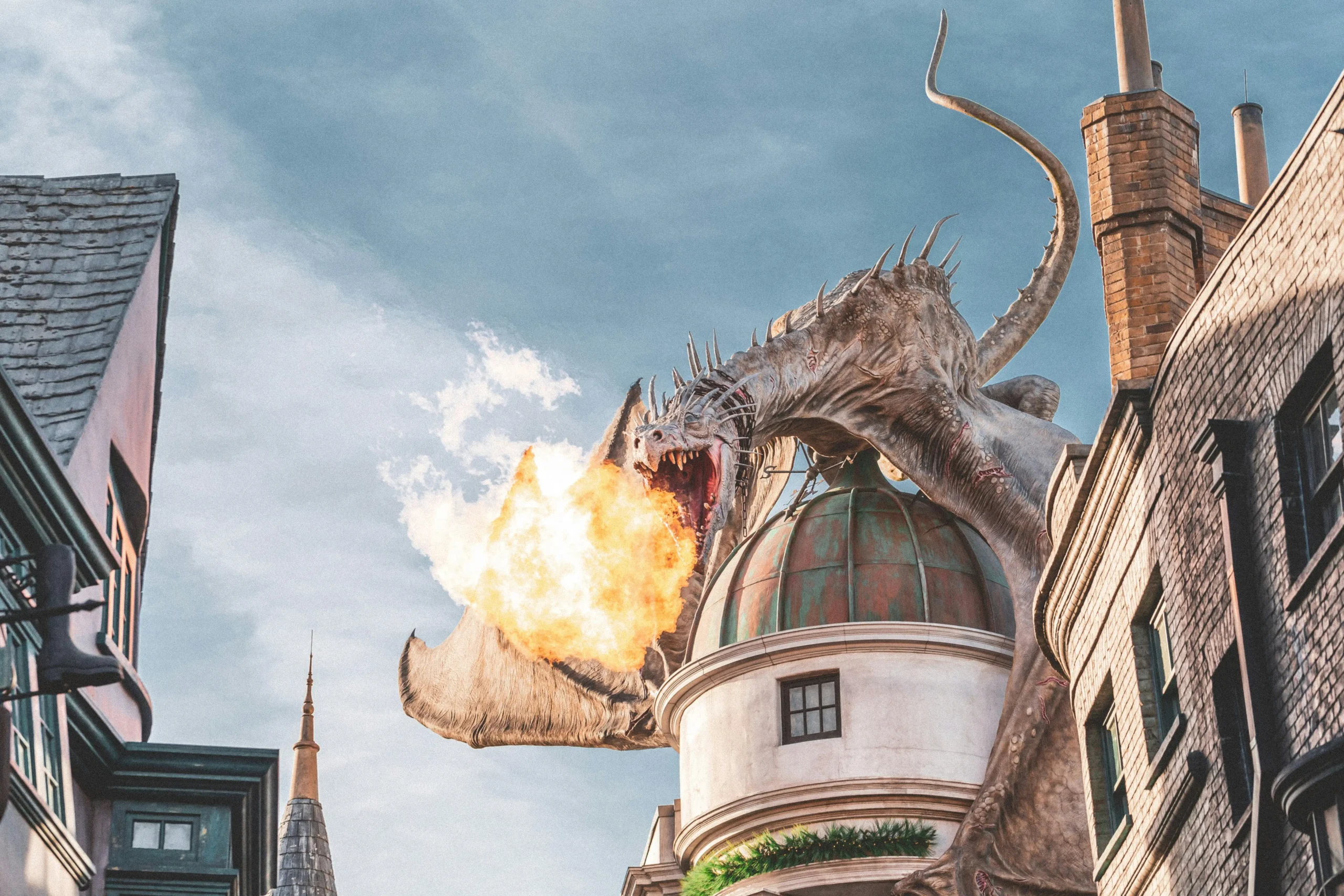
Have you ever dreamed of discovering a secret door in your home that leads to another world? Or have you imagined what would happen if an everyday object came to life? But first, let's define this concept.
Fantasy is a literary genre that includes magical and supernatural elements that do not exist in the real world. Although some writers mix the real world with fantastic elements, many create wholly imaginary universes with their own physical laws and populations of imaginary races and creatures. Thus, the fantastic tale is a literary genre that allows us to play with the real and the unreal, explore the impossible and break the laws of logic.
In this adventure, you will become a writer of fantastic tales. You will have to investigate, analyze, imagine and create your own story with extraordinary events that defy reality.
Get ready to travel to alternate worlds, meet mysterious characters and experience the inexplicable... with the only essential tool: your imagination.
Task
Your main objective will be to write an original fantasy short story. This story must have a minimum length of 500 words and respect the fundamental characteristics of the genre.
In addition, you must:
-
Design a main character with unique traits.
-
Include at least one fantastic element: a magical object, an unreal creature, an unexplained event, or others.
-
Use the narrative structure appropriately: beginning, development and denouement.
-
Present the story in a creative way.
-
This task can be done individually or in pairs.
Process
Let's check some basic information
-
Watch the Youtube videos to clarify some information
https://youtu.be/rtgYJ5YjBiU?si=Z9VCU868APTrkE3R
https://youtu.be/n_cqszvdTqk?si=biOSMasTz6oJLiob
-
Read the following summary of "Alice's Adventures in Wonderland", like an example of a Fantasy story.
https://www.sparknotes.com/lit/alice/summary/
-
Plan your story
-
Define the type of narrator you will use (protagonist, omniscient, witness).
-
Choose a conflict that provokes the appearance of the fantastic.
-
Use the following outline to organize your ideas:
-
Beginning: introduction of the character, place and initial situation.
-
Knot: appearance of the fantastic element, main conflict.
-
Denouement: resolution of the conflict (can be closed or open).
-
-
Write the draft
Write your story taking care of spelling, coherence of ideas and narrative style. Try to maintain the tension and mystery until the end.
-
Proofread and edit
Read your text aloud or share it with a partner. Correct mistakes, improve descriptions, and make sure the fantasy element is well integrated into the story.
-
Submit your story
Evaluation
|
Criteria |
Excellent (5) |
Good (4) |
Fair (3) |
Need work (1-2) |
|
Understanding the fantasy genre |
The story clearly incorporates fantastic elements and breaks realistic logic. |
There are one or two fantastic elements well used. |
The fantasy element is underdeveloped. |
Story is mostly realistic or does not include the fantastic. |
|
Creativity |
The story is original, with striking characters and situations. |
It has good if somewhat commonplace ideas. |
Some interesting ideas, but poorly developed. |
Story is unoriginal or copied. |
|
Narrative coherence |
The story has a clear and fluid structure (beginning, middle and end). |
The structure is present but with minor flaws. |
Disorganization in the narrative. |
Story is confusing or incomplete. |
|
Spelling and writing |
No spelling or grammatical errors. |
Minimal errors |
Several errors that make reading difficult. |
Many errors that impede comprehension. |
|
Final presentation |
Creative use of visual and/or sound resources. Very well presented. |
Good presentation, though simple. |
Poor presentation. |
Incomplete or absent presentation. |
Conclusion
You have reached the end of your journey through the fantastic, but that does not mean that the adventure ends here. On the contrary, now is the beginning of your journey as a creator of worlds, of unusual atmospheres, of characters that defy logic and of situations that make you doubt between the real and the imaginary.
Throughout this experience, you faced the challenge of transforming ideas into words, of building a story that not only entertained, but also aroused curiosity, emotion and amazement in those who read or listen to it. This is an act of deep imagination, of serious play with reality, and also a form of personal expression.
Take a moment to reflect:
- What did you enjoy most about the creative process?
- What did it mean to you to invent a universe where the inexplicable is possible?
- How did it feel to give life to characters and conflicts that do not follow the rules of the everyday world?
All of this is so that you don't end up with a simple “final product”. Your fantasy story is just a gateway to new creative possibilities. Now that you have the tools, you can continue to write more stories, explore other genres, read new authors, and share your imaginary worlds with more people.
Always remember: “Literature is a luxury; fiction is a necessity”. - G.K. Chesterton
Teacher Page
By Sarah Valentina Rodriguez Bedoya
English Communicative Competence V
UPB