
Introduction
Did you ever wish you could have your very own Picasso? What about making your own?
Here is a quick run down on who he was and what he's known for
- Pablo Picasso was a master of the arts and an integral part of Art History
- Spanish artist during the period in art history called Modernism that lasted from 1880's-1940's
- He was active from early 1890's-early 1970's
- His works, in recent times, have sold for $20 million dollars
Heres some examples of his work
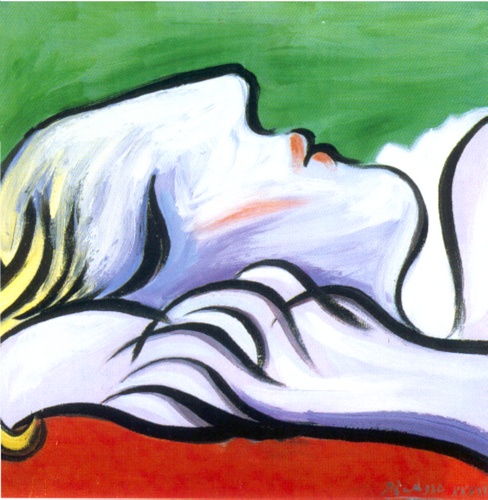
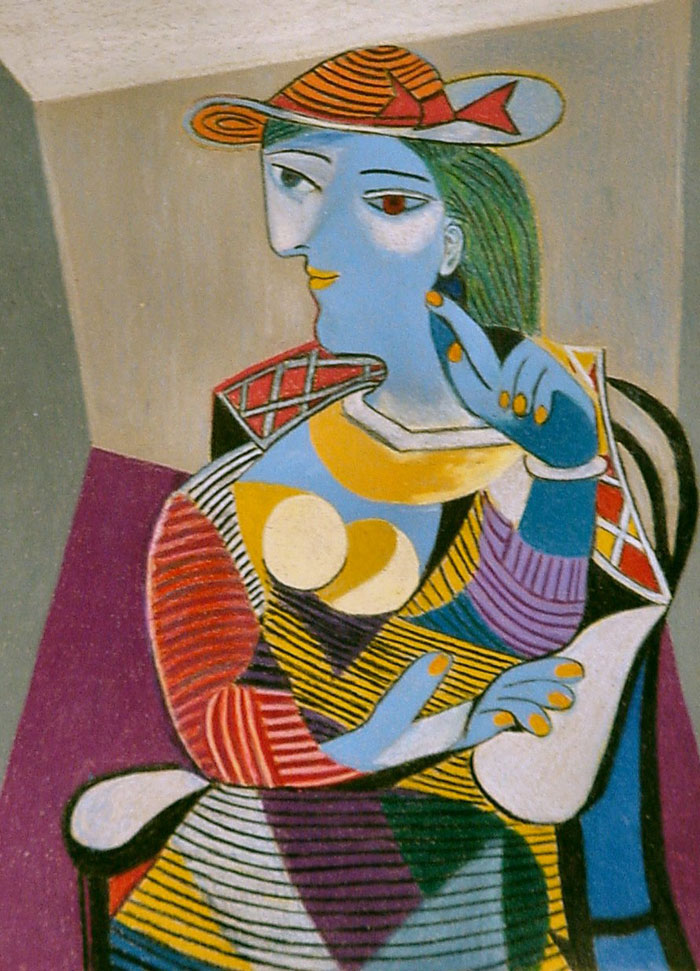
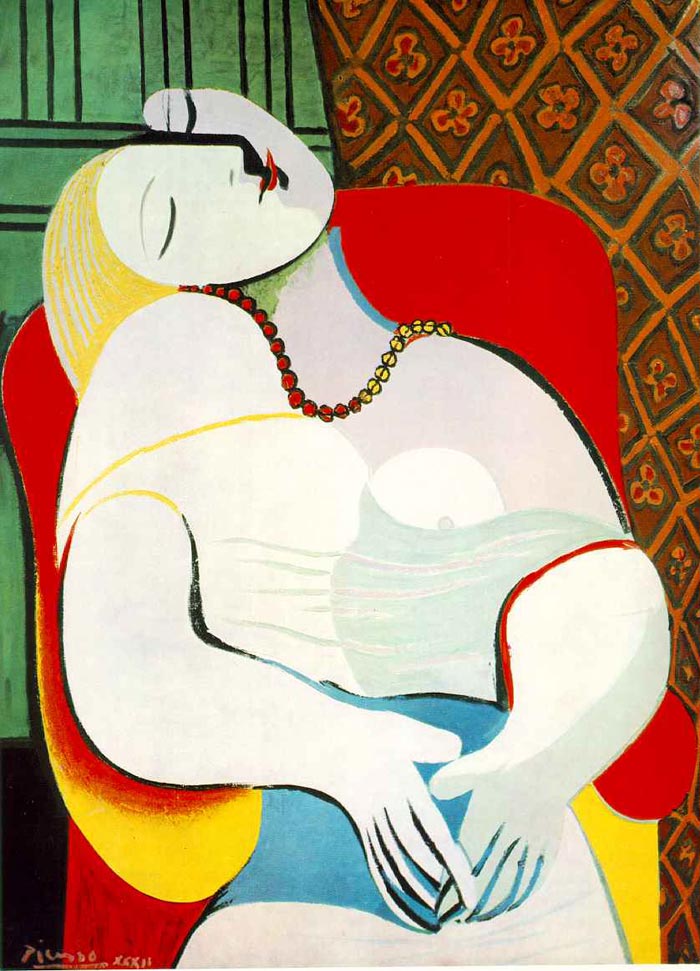
Task
We can now make our very own Picasso very easy, cheaply and digitally!
A few things you'll need for your own safe keeping:
- Pencil, paper and an email
A Few things you MUST complete for this lesson to be a success:
- Use all attributes at least once in your face (ex. one eye, one nose, one ear is OK)
- Use at least 3 colors in your piece
- The placements of your attributes MUST be positioned in an offset manner (See examples)
Other than that we can get started...
Process
This lesson is online here is the link, you may need to copy and paste the link
[video:http://www.picassohead.com/ align:center]
Step 1:
- Get more inspiration and explore the Gallery for ideas
Step 2:
- Write down or sketch anything that stands out to you, things like color, placements of shapes etc., Think about the attributes and components that make up the example
Step 3: When you're ready
- Click: Create Your Own
Step 4: the middle menus allows you to select your face
- Select face and drag over to the canvas to the right
Step 5: Look to your left, there are a list of attributes to choose from select at least 1 of each
- faces
- eyes
- noses
- lips
- ears
- eyebrows
- hair
- abstracts
- signature
Step 5: Select attribute by clicking and drag it to the blank canvas on the right
- Click and drag attributes over to canvas to fill in your face
* experiment with placement and color, scale, rotation, perspective (use menu at bottom of page)
Step 6: Once you are happy with your Picassohead
- click save/email this painting at the bottom
- title your painting
- email picassohead to whoever you want
- now SAVE to the gallery
Evaluation
How will I be graded?
You will be graded on completeness of the steps in the Process page, remember you have pencil and paper so you can keep track.
- Use all attributes at least once in your face (ex. one eye, one nose, one ear is OK) (25pts)
- Use at least 3 colors in your piece (25 pts)
- The placements of your attributes MUST be positioned in an offset manner (See examples) (25pts)
- Save, emailed and put in Gallery (25pts)
Conclusion
Now you're ready to expirement with other materials!
Teacher Page
I. Lesson Title and Rationale:
Mr. Picassohead
-To give stds an opportunity to explore with a media, practice, before they work with materials
II. Grade Level: 2nd.3rd
III. Lesson # (in relation to unit): 1
IV. Enduring Understanding:
Identity
V. Key Concepts:
- Different attributes make up our identity
- How we see ourselves isn’t always how others see us
VI. Essential Question:
- What attributes make up our identity?
- How do you see yourself?
- How do you think others see you?
- How do you want to be seen?
VII. Lesson Objectives:
- Identify attributes of a Picasso
- Create a Picasso using Mr. Picassohead
- Defend the use of attributes in their pieces
VIII. Specific Art Content:
- Line, shape, color, form, scale
IX. Resources & Materials for Teacher:
MrPicassohead.com
Internet
Computer
X. Resources & Materials for Students:
Pencil, paper, eraser
Internet
Computer
MrPicassohead.com
XI. Instruction and Its Sequencing:
This is a supportive Lesson for knowledge building
Day(s) for Lesson
- 1. Introduction/Motivation: (this must include discussion questions)
- I can bring in Picasso prints as a surprise, maybe an original I made in his style
- Introduce Artist and show examples, some quick facts will be given as well
- 2. Purpose/Objective:
- Complete a Picasso head self portrait
- 3. Instruction:
- I have a step-by-step process on the WebQuest
4. Guided Practice
- I will be available for questioning as I facilitate and have the site up myself
5. Independent Practice
- Complete the final piece, email me a copy and add piece to the Gallery
6. Closure
What concluding event can I design that allows students to reflect on the essential question and how your lesson helps to investigate the big idea.
- What attributes make up our identity?
- How do you see yourself?
- 7. Formative Evaluation
- Whip Around (after intro)
- Walk Around
- One on ones
- 8. Classroom Management Procedures
- Mona Lisa
- Lights ON/Off
- Slide Whistle
9. Adaptations for Students with Special Needs:
I can work with them one on one, also I can limit the number of elements/attributes required
Repeat as Needed
XII. Interdisciplinary Connections:
- Math-line
XIII. Summative Assessment and Evaluation:
- Written questionnaire and reflection
- What attributes make up our identity?
- How do you see yourself?
- What did you learn about Picasso
XIV. References & Resources:
List all references used to develop this lesson.
XV. Art TEKS
Critical evaluation and response. The student responds to and analyzes artworks of self and others, contributing to the development of lifelong skills of making informed judgments and reasoned evaluations. observation and perception. The student develops and expands visual literacy skills using critical thinking, imagination, and the senses to observe and explore the world by learning about, understanding, and applying the elements of art, principles of design, and expressive qualities. The student uses what the student sees, knows, and has experienced as sources for examining, understanding, and creating artworks.
XVI. National Art Standards
describe how different *expressive features and *organizational principles cause different
responses
Choosing and evaluating a range of subject matter, symbols, and ideas